Learn Spanish Vocabulary in Just 10 Minutes a Day
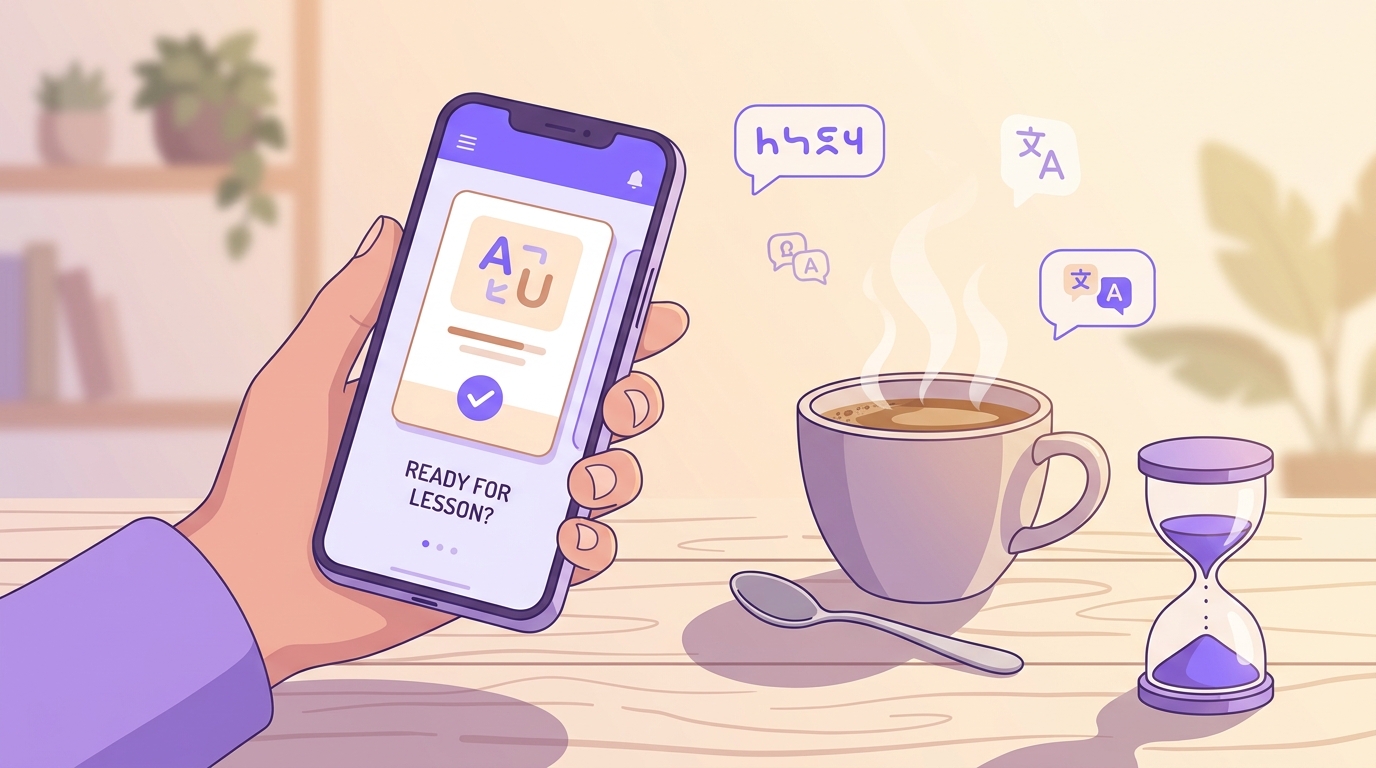
"I'll start learning Spanish when I have more time" — that's how it never starts. The big block of free time never shows up, and the motivation for three-hour weekend marathons burns out within a week. Here's the good news: your vocabulary doesn't grow from heroic weekend sessions. It grows from short bursts every single day. Ten minutes is enough to add new Spanish words daily and keep the old ones — if you spend those minutes the right way.
Why 10 minutes a day beat 2 hours on the weekend
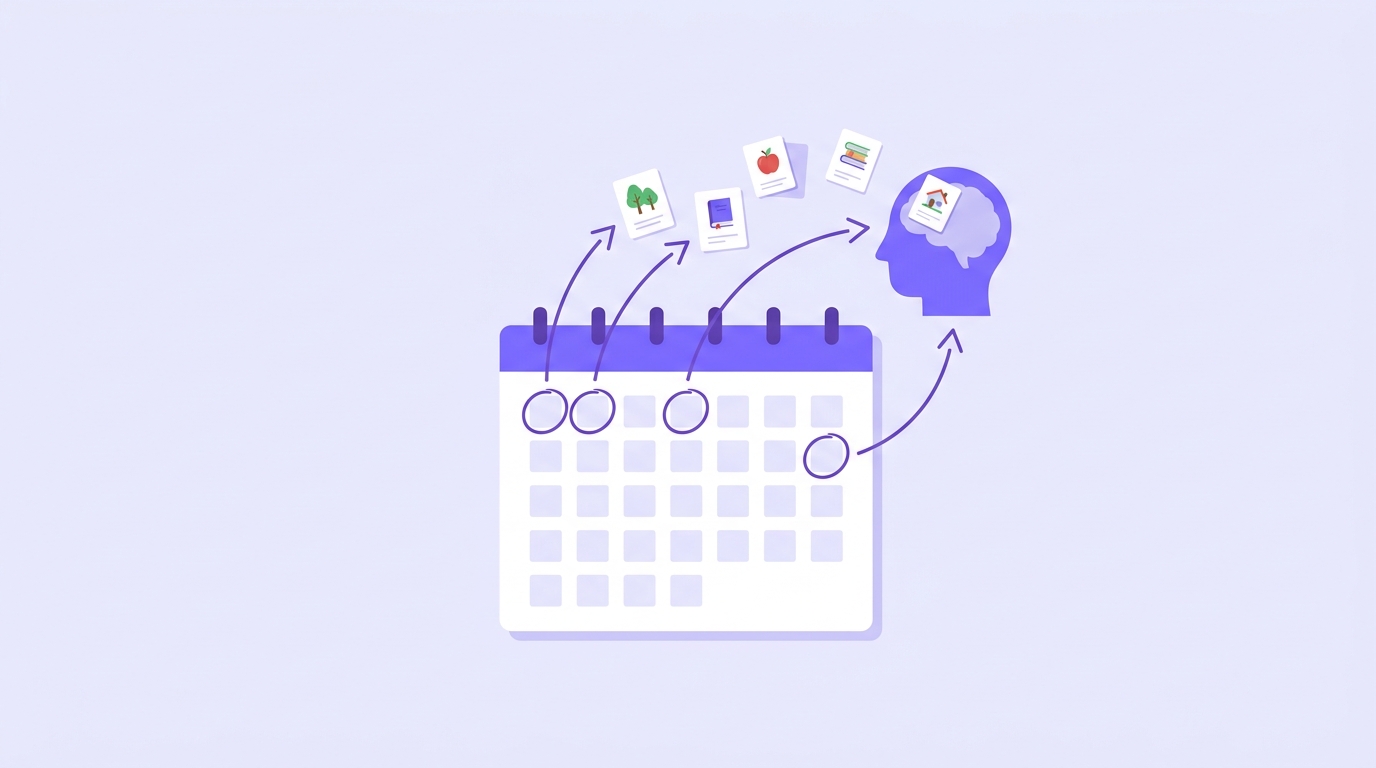
Memory cares far more about frequency than duration. A word you meet today, tomorrow, and the day after sticks much better than a word you drilled ten times in one Sunday and never saw again for a week. That's spaced repetition in a nutshell: short encounters with a word, spread out over time, beat the forgetting curve.
Daily ten-minute sessions have two hidden advantages, too. First, they're almost impossible to skip: dodging a full study session is easy, but you can always find ten minutes — in a line, on the bus, over coffee. Second, a short session isn't intimidating. Your brain doesn't fight something that ends in ten minutes, so you actually sit down and do it instead of putting it off. For more on making words stick for good, see how to memorize Spanish words effectively.
What those 10 minutes are made of
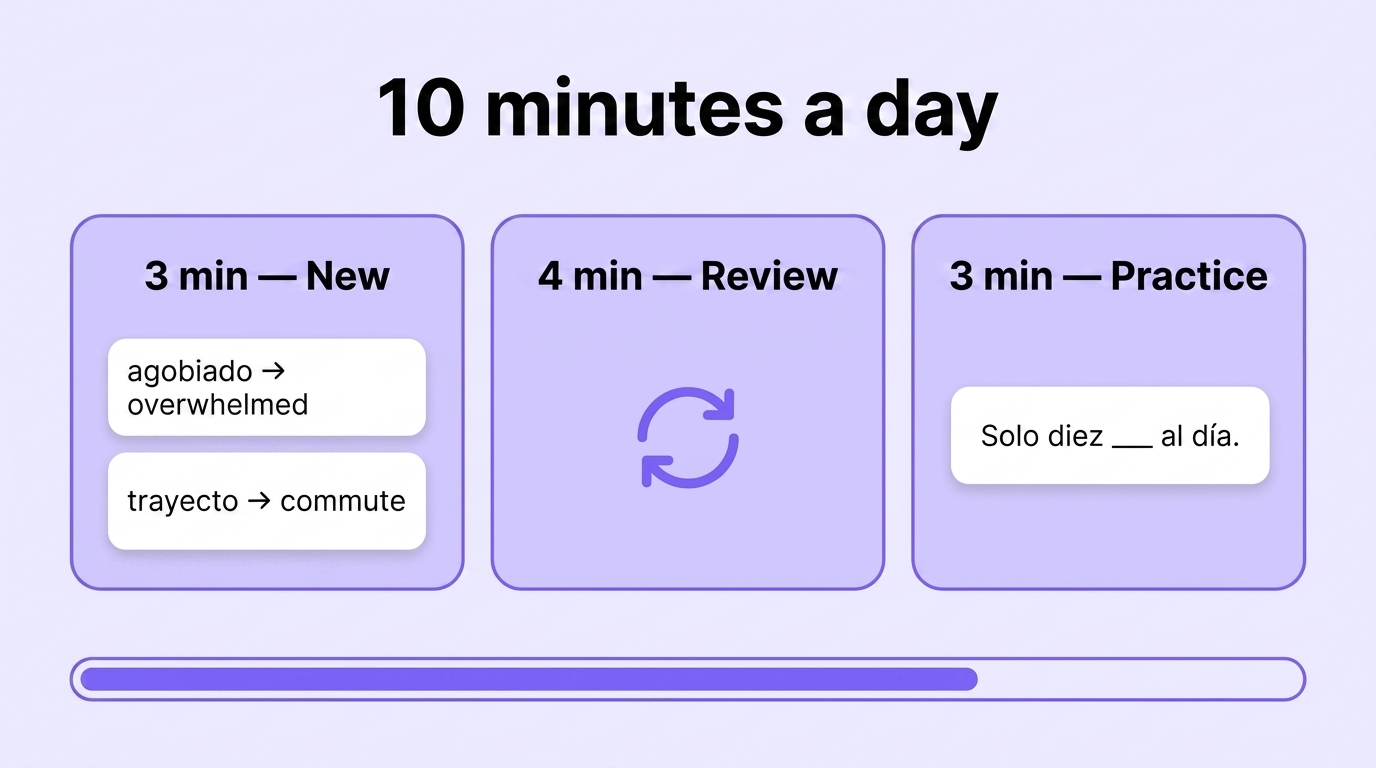
Ten minutes isn't "flip through a dictionary at random." For the time to work, split it into three short blocks with different jobs:
| Block | Time | What you do |
|---|---|---|
| New | 3 minutes | 2–3 new words with translation, an example, and pronunciation |
| Review | 4 minutes | words that are due to be refreshed on schedule |
| Active practice | 3 minutes | fill in the blank, say it out loud, build a phrase |
The third block is the key one. Your brain skips right past "just look at the translation" — recognizing a word is not the same as recalling it. But when you pull a word out of memory yourself (drop it into a sentence, say it, choose the right option), it really sticks. So don't skimp on active practice in those last minutes, even when you'd rather just "read some new words."
Where to get words so you don't waste time searching
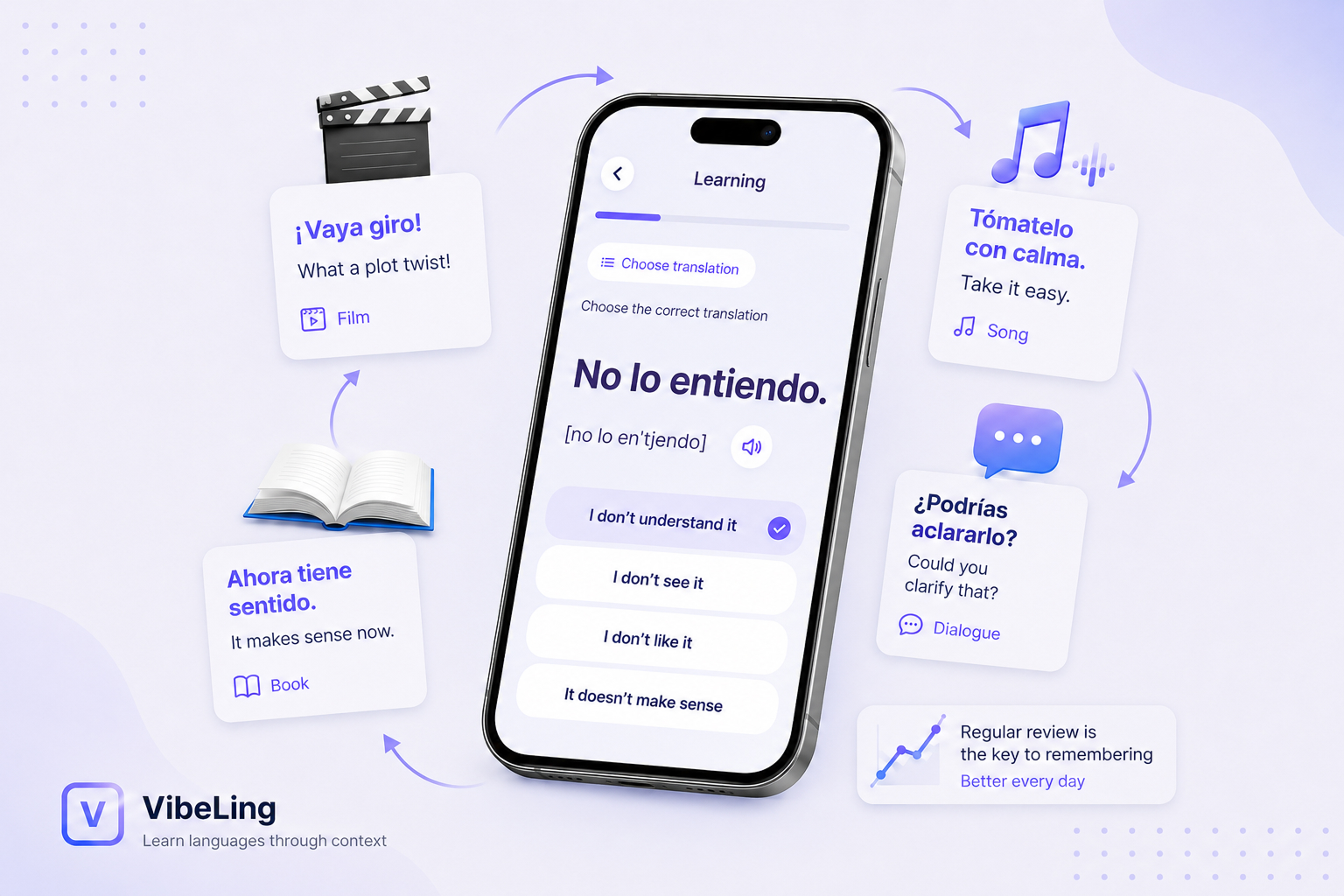
The biggest time-drain in those ten minutes isn't studying — it's searching: where to find words, where's the translation, where's an example. While you google "what does agobiado mean" and paste it into notes, the minutes slip away. So collect your words ahead of time, from your own life: a movie, a series, a song, an article, a conversation — spot an unfamiliar word, save it with one tap, and it's already waiting for you with a translation, an example, and audio.
That's exactly what VibeLing is handy for: you add any Spanish word and it pulls in the translation, a real usage example, and the pronunciation — no building cards by hand. Words gather into your personal dictionary, sort into collections, and the app reminds you when it's time to review. Your ten minutes go into practice, not into getting ready for it.
5 formats for every day, so you don't get bored
The same format gets old, and studying turns into a chore. Switch the type of practice from day to day — that way different facets of a word get worked, and your interest holds:
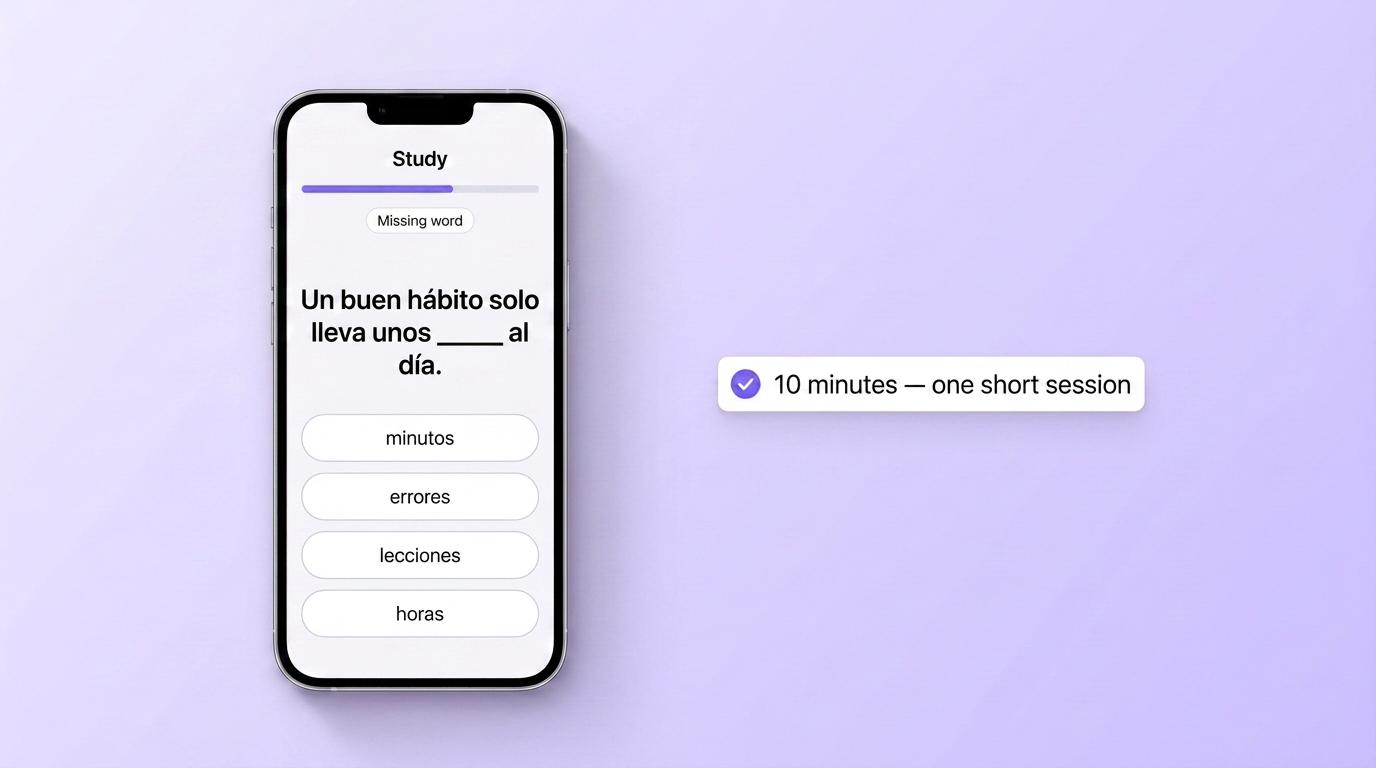
- Fill in the blank. A sentence with a gap and options to choose from — teaches you to recognize a word in context, not in a vacuum.
- Say it out loud. Pronounce the word and its meaning — speech memory kicks in, and the word comes back more easily in conversation.
- Flashcards. The classic for a quick run-through: meaning → word and back.
- Word from a phrase. Learn not an isolated word but a short phrase as a whole — so you see it "in action" right away.
- Free typing. Typing a word from memory is the hardest — and it anchors it the deepest.
By the way, filling in the blank is more useful than just picking a translation from four options: you strain your memory instead of guessing. And saying words out loud is a direct bridge to speech; there's more on that in how to learn Spanish words to actually speak.
How to fit 10 minutes into your day so you don't forget
A standalone "Spanish session" is easy to skip — it's tied to nothing. It's far more reliable to attach those ten minutes to something you already do every day:
- morning coffee → while the kettle boils, three new words;
- commute → the review block on the bus or train;
- lunch break → a quick session instead of the social feed;
- evening before bed → review what you met during the day (and sleep locks it in).
The rule is simple: not "I'll find time later," but "after coffee — words right away." A habit rides on a trigger, not on willpower.
A streak of days in a row helps too: once you see you've studied 12 days without a gap, you don't want to break it. But don't turn it into a cult — miss a day, come back the next one, nothing went up in smoke.
Common mistakes in those 10 minutes
- Taking on too many new words. You won't hold 15 new words at once. 2–3 a day — and in a month that's nearly a hundred.
- Only recognizing, never recalling. If you just scroll through translations, the effect is almost nil. Always pull the word out of memory yourself.
- Learning bare words without context. A word without an example is the first to be forgotten. Always keep a phrase where it lives right next to it.
- Skipping review for the sake of new words. New is more fun, but it's review that keeps what you've learned from leaking away. Refresh the old first.
The takeaway
You don't need to wait for a "free evening" — it won't come. You need ten honest minutes a day: a little new, some review, and always active practice where you recall words yourself. Collect words from your own life, tie the session to your morning coffee or commute — and your vocabulary will start growing on its own, without the strain.
The easiest way to do all this in one place — where words, translations, examples, pronunciation, and reminders are already gathered together — is the VibeLing app for learning Spanish words. Turn your ten minutes into real progress.