How to Finally Master Ser vs Estar (and Other Tricky Spanish)
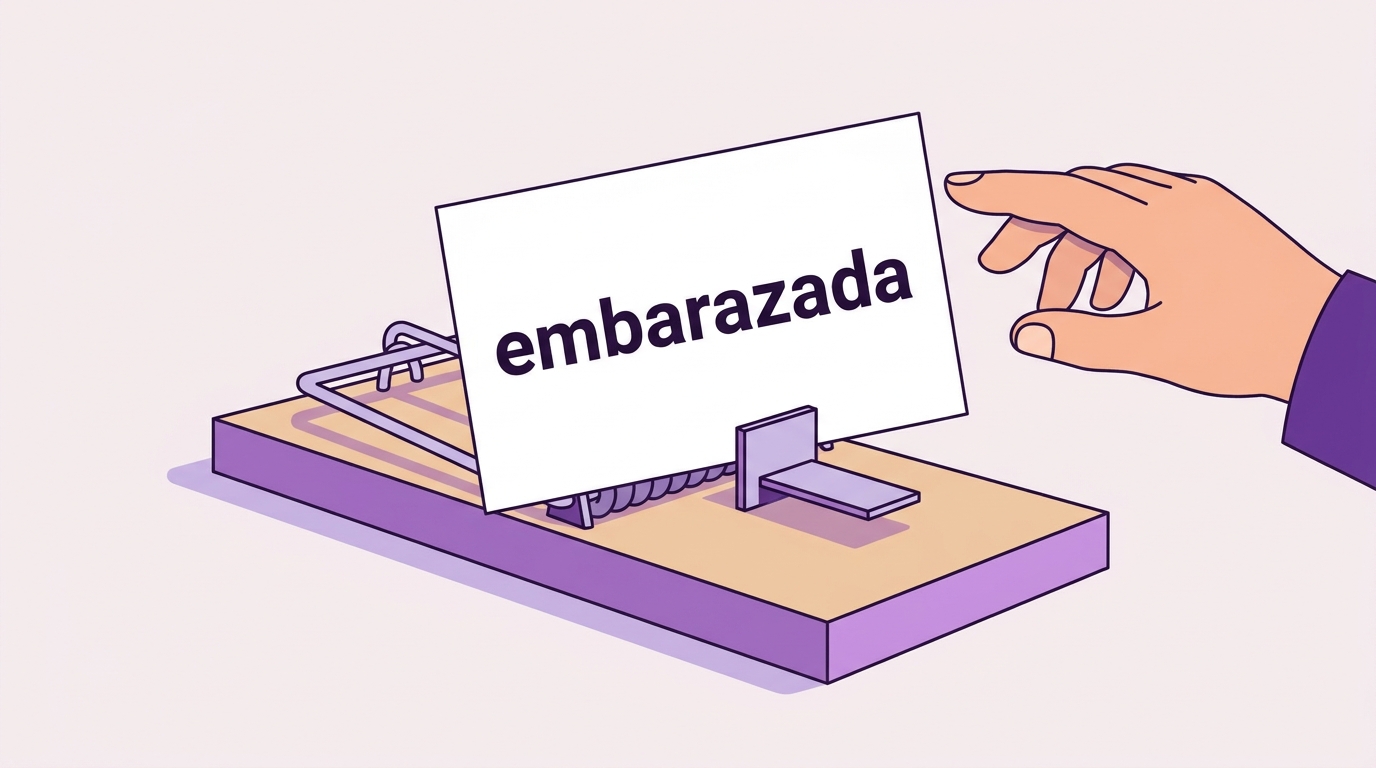
In the sentence "la sopa está buena," every word looks familiar. And yet "la sopa es buena" — same words, one tiny change — means something different. The first says this soup tastes great right now; the second says soup is a good thing in general. Both verbs translate as "to be," and that's exactly where most learners hit a wall: decent vocabulary, grammar mostly in order, and still this one choice trips them up in every other sentence.
Why ser vs estar is its own special problem
With ordinary words the deal is fair: learn mesa, know mesa. With ser and estar it doesn't work that way, for three reasons.
English gives you no parallel. One English verb — to be — splits into two Spanish ones, and your instinct has no opinion about which to use. Guessing from translation is impossible; you can only know.
One adjective changes meaning with the verb. Es listo — he's clever. Está listo — he's ready. Es aburrido — he's boring. Está aburrido — he's bored. The adjective is identical; the meaning swings completely on ser or estar.
The "rules" have famous exceptions. "Estar is for temporary things" — then why is it siempre está en Madrid for someone who's lived there twenty years, and es joven for something as temporary as youth? Half-remembered rules collapse exactly when you need them.
And you can't route around the problem: ser and estar are two of the most frequent verbs in the language. Every description of a person, place, mood or state runs through one of them. Speech that dodges them sounds correct but noticeably unnatural.
Why "the 10 rules of ser vs estar" lists don't work
The first thing almost everyone does: google a rules list and sit down to memorize it. A week later, two rules survive, jumbled together. The reason is simple: in a list, "ser for professions" and "estar for locations" sit side by side and look interchangeable. The brain has nothing to grab onto — no situation, no image, no sentence, just abstract rules that blur into each other.
A list is useful as a reference to check against. As a memorization tool, it loses to almost everything else.
The logic: identity vs state
The good news: underneath the rule lists there's one image that carries most of the weight. Ser is what something is — its identity, the answer to "what kind of thing is this?" Estar is how something is doing — its state, the answer to "what condition is it in right now?"
| Verb | The image | Examples |
|---|---|---|
| ser | identity: what it is | soy médico (profession), es de México (origin), es alta (trait), son las tres (time) |
| estar | state: how it is right now | estoy cansado (condition), está en casa (location), está triste (emotion), estamos comiendo (action in progress) |
Run the tricky pairs through this image and they stop being random: es aburrido — boredom is part of who he is; está aburrido — boredom is his current state. La sopa es buena — a general fact about soup; está buena — the state of this bowl, right now, on your table.
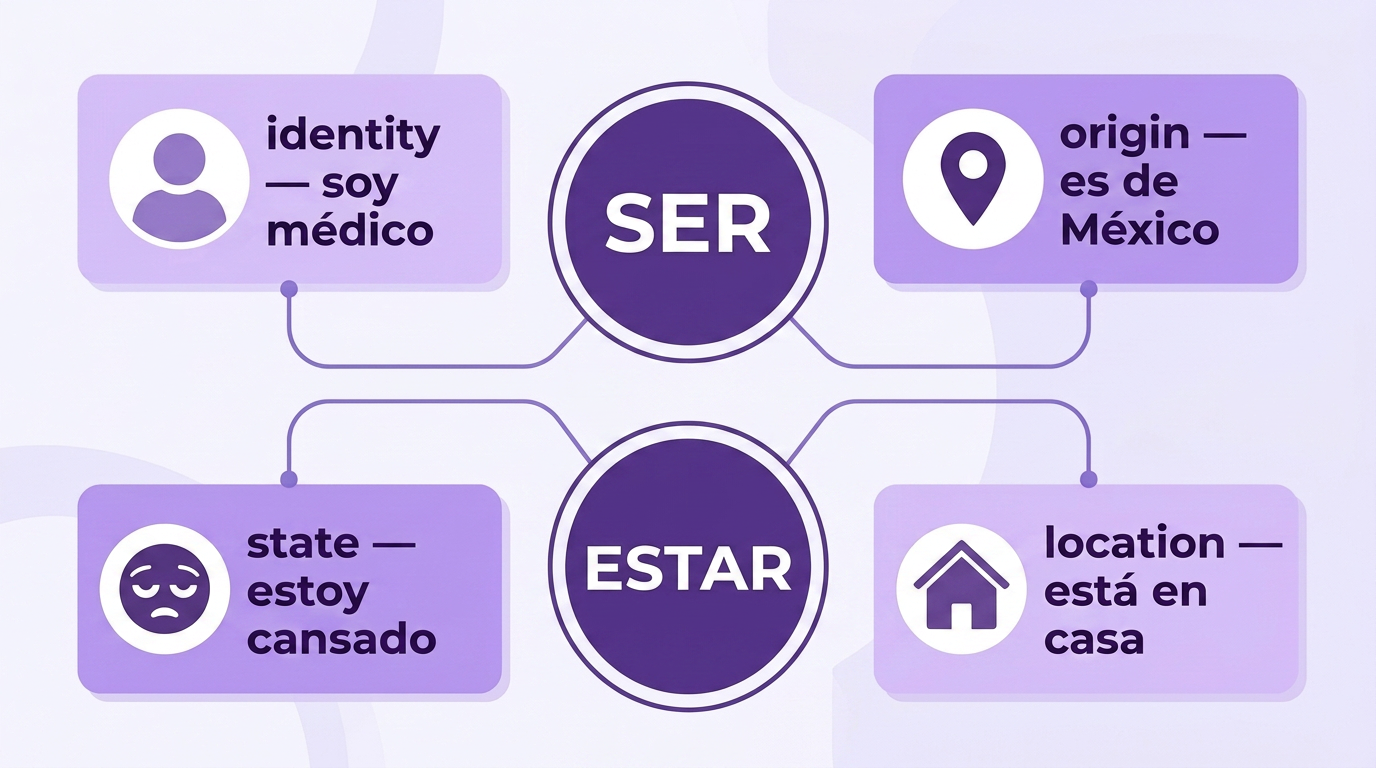
The image doesn't cover everything — language is older than any rule, and cases like está muerto you'll simply absorb with time. But it turns cramming into guessing with a hint: even in an unfamiliar sentence, "identity or state?" gets you to the right verb far more often than a memorized list does.
Learn whole phrases, not rules
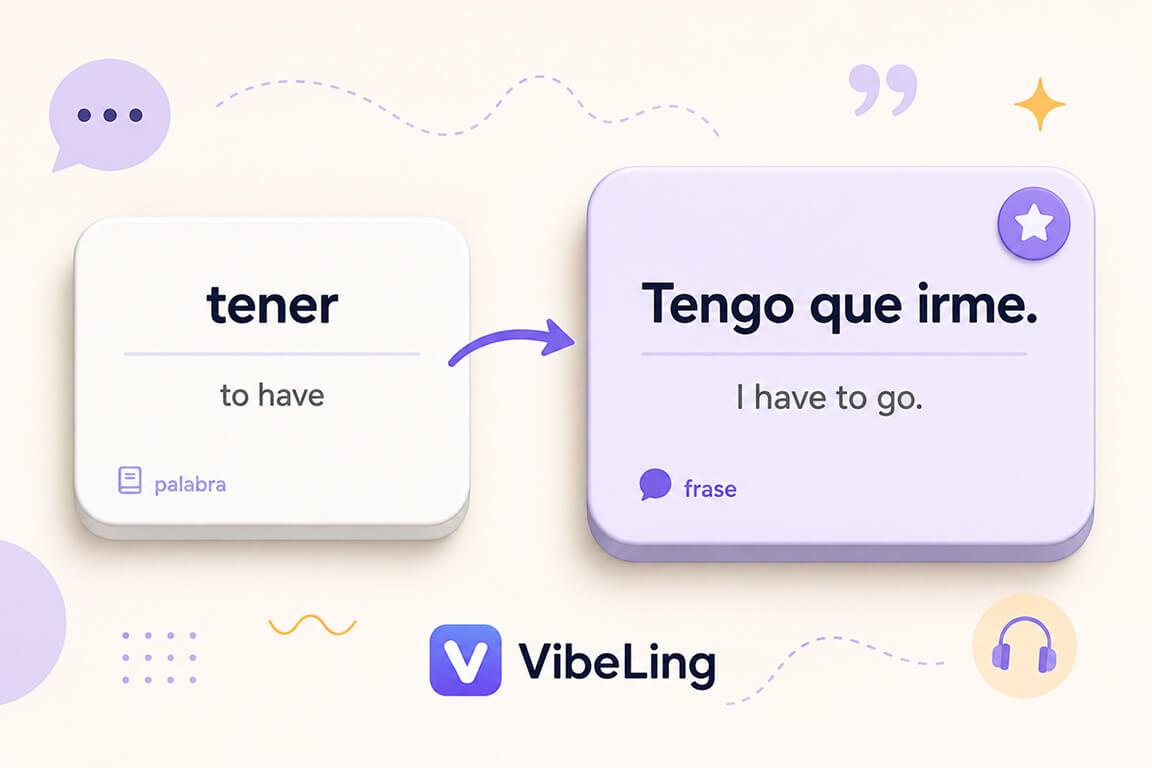
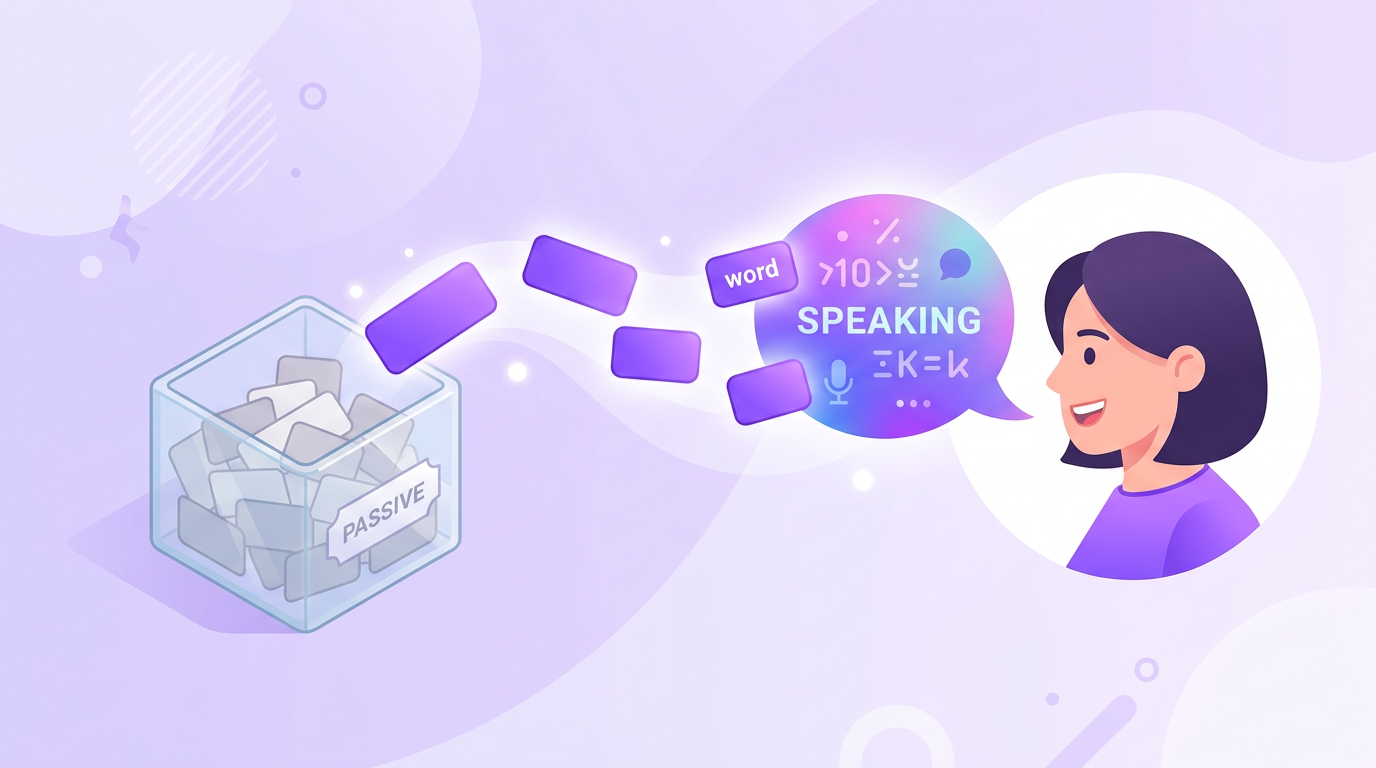
The main mental shift you need: stop trying to compute ser vs estar from rules in real time, and start collecting short phrases where the choice is already made. Phrases stick far better than isolated words or abstract principles — we've broken down why in a separate article on learning phrases instead of words.
So instead of the pair "estar — to be (temporary)," save a sentence:
La sopa está riquísima hoy. — The soup is delicious today.
A sentence gives you three things at once: context, grammar in action, and a small emotional hook for memory to grab. After twenty saved sentences, the right verb starts coming out on its own — not because you ran the rules, but because "estoy cansado" simply sounds right and "soy cansado" doesn't.
The other classic trouble spots
Ser vs estar has siblings, and they respond to the same treatment:
por vs para — gracias por todo, but un regalo para ti.
preterite vs imperfect — ayer comí paella, but de niño comía paella cada domingo.
saber vs conocer — sé la respuesta, but conozco a María.
Rule tables exist for all of these, and they fail in conversation for the same reason. What works is the same move: collect real sentences where the choice is already correct, and let the pattern build itself.
How much do you actually need?
Grammar books devote whole chapters to these contrasts, and that's intimidating. But the core that covers everyday speech is small: a few dozen high-frequency phrases with ser, estar, por, para and the rest — the ones you keep meeting in shows, videos and conversations. Start with 20–30 of those. Your own collection always beats someone else's list, because every phrase in it is tied to the moment you met it.
How to make them stick
From here it's ordinary vocabulary mechanics, no magic. A phrase needs to be met, saved with its context, and then reviewed a few times at growing intervals — right before it's about to slip away. We've covered how spaced repetition works in detail; the short version is that a few well-timed reviews over several weeks do what fifty cramming sessions can't.
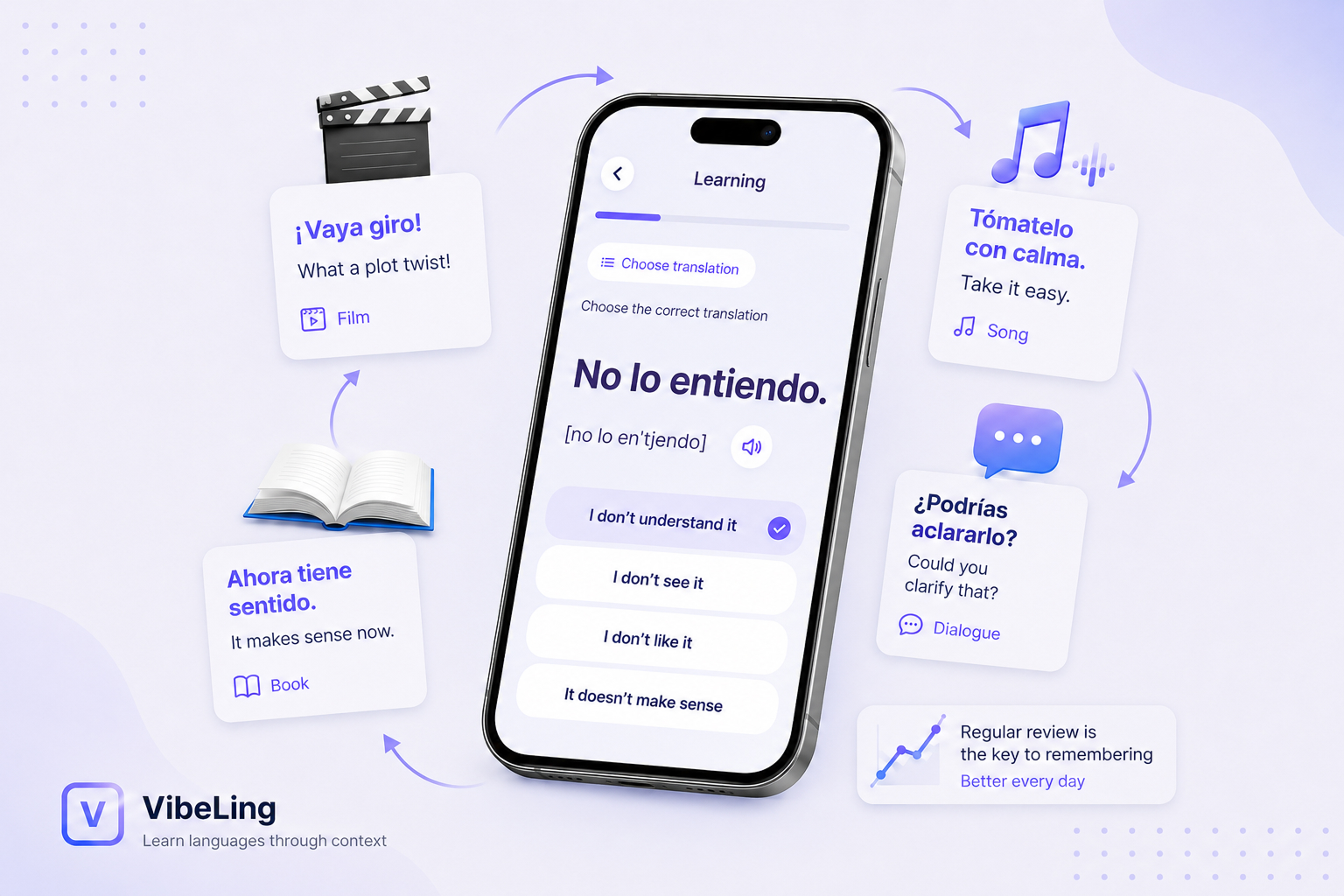
Running that system by hand is tedious, so it's easier to hand it to an app. In VibeLing it looks like this: you hear "¿estás listo?" in a show — type estar into the search, and the app shows the translation, transcription, audio, a picture and several example sentences. The phrase lands in your personal dictionary, and training sessions bring it back on the right days: pick the translation, fill in the missing word, say it out loud.

Treated this way, ser vs estar stops being a grammar monster — it becomes a handful of phrases you happen to know cold.
Where to start today
- Write down the tricky pairs you already half-know — sentences with ser, estar, por, para you've seen many times but still hesitate on. There's usually a dozen.
- For each one, save a living sentence, not a rule.
- Run your sentences through the identity-vs-state image above and explain each choice to yourself once.
- Add new phrases as you meet them — from shows, videos, songs — not from rule tables.
Ser vs estar stops being a problem the moment you stop studying it wholesale. Twenty phrases with context and review will do more than two hundred rules. If you want the saving and reviewing to happen by themselves, start a personal dictionary in VibeLing — add phrases one at a time, and let the app own the review schedule.