False Friends: Spanish Words That Trick You
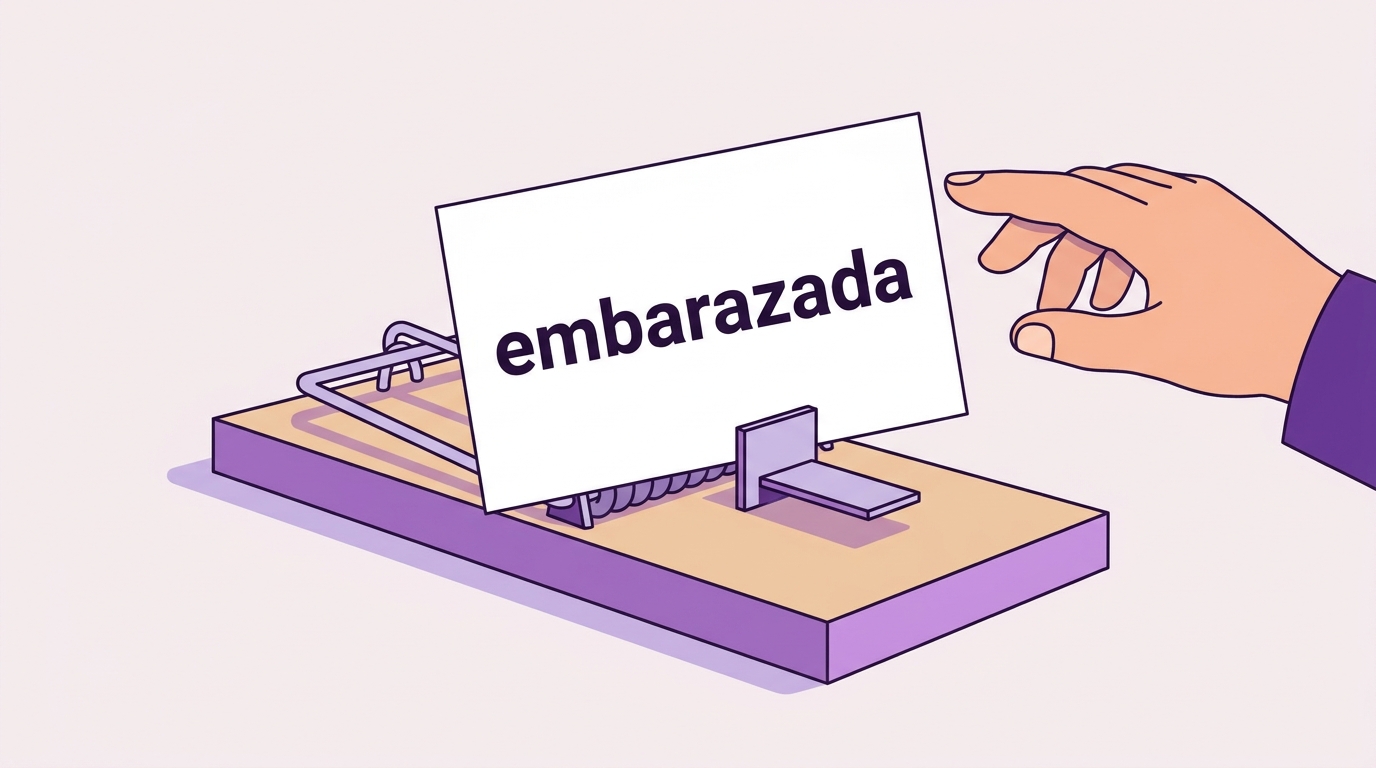
You read: «Mi hermana está embarazada» — and translate on autopilot: my sister is embarrassed. The translation is wrong: embarazada means pregnant. But the real trouble isn't the mistake itself — it's that it doesn't feel like a mistake. An unfamiliar word, you would have looked up. This one looked familiar, so the check never even started.
These words are called false friends (falsos amigos): they look or sound like English words but mean something else. There aren't that many of them, yet they come up constantly, and they catch even people with a solid level — precisely because a solid level brings confidence, and confidence switches the checking off.
Where false friends come from
Almost every one of these pairs is a set of relatives that drifted apart. A word enters both languages from the same source — usually Latin — and then lives its own life in each of them.
Take embarazada itself. English borrowed embarrass from French embarrasser, which goes back to the Iberian embarazar — to hinder, to encumber. English kept the emotional kind of hindrance; Spanish narrowed it to one very specific condition. The kinship is real, but the meanings said goodbye centuries ago — and produced the single most famous trap between the two languages.
Same story with librería and library, both from Latin liber, «book». Spanish kept the shop where books are sold; English took the place where they're borrowed. Tell a Spanish friend you spent the afternoon «en la librería» borrowing novels, and the scene in their head won't match yours.
The classics: 15 words that fool everyone
Here are the most common traps. The third column matters as much as the second: if embarazada means pregnant, you want to learn right then how to actually say embarrassed. As long as that gap stays open, the old association will keep coming back.
| Spanish word | Looks like | Actually means | And the word you wanted |
|---|---|---|---|
| embarazada | embarrassed | pregnant | embarrassed — avergonzada |
| éxito | exit | success | exit — salida |
| actualmente | actually | currently | actually — en realidad |
| librería | library | bookstore | library — biblioteca |
| carpeta | carpet | folder | carpet — alfombra |
| fábrica | fabric | factory | fabric — tela |
| constipado | constipated | having a cold | constipated — estreñido |
| ropa | rope | clothes | rope — cuerda |
| sopa | soap | soup | soap — jabón |
| asistir | to assist | to attend | to assist — ayudar |
| realizar | to realize | to carry out | to realize — darse cuenta |
| sensible | sensible | sensitive | sensible — sensato |
| simpático | sympathetic | nice, friendly | sympathetic — comprensivo |
| largo | large | long | large — grande |
| lectura | lecture | reading | lecture — conferencia |
A few pairs deserve extra care. If a Spanish speaker tells you «no quiero molestarte», nothing sinister is going on — molestar just means to bother. Tell a doctor in Madrid «estoy constipado» and they'll hear «I have a cold», not what you meant. And the classic first-person landmine: «estoy embarazado» announced by a man trying to say he's embarrassed has brightened many a Spanish classroom. These are worth learning before they happen to you, not after.
Why they hold on so stubbornly
The mechanics of the trap are simple. When your brain sees a word that resembles one it knows, it doesn't run a check — it instantly serves the ready-made English answer. The answer arrives fast and comes with a feeling of certainty, and that certainty is precisely the signal we use to decide there's nothing to check.
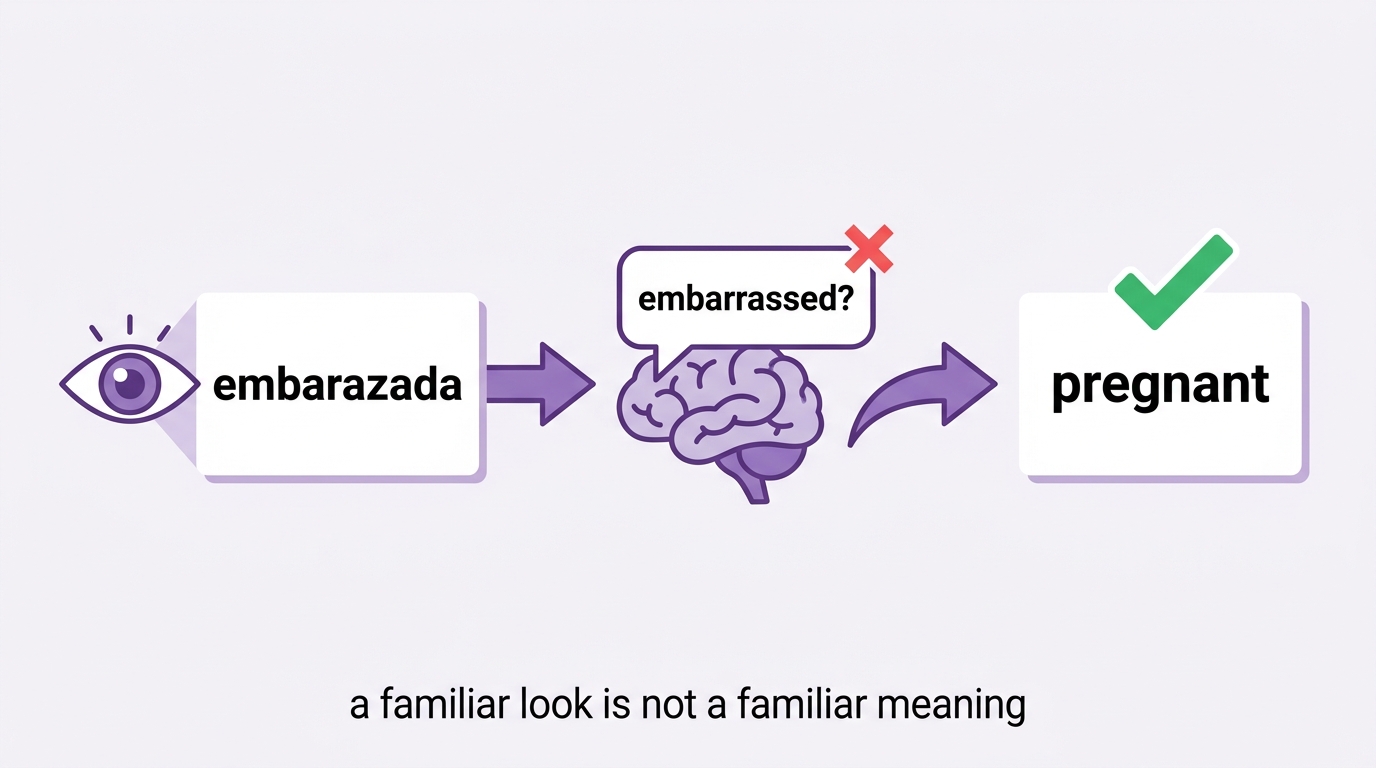
Then it gets worse: this mistake almost never gets corrected. The other person usually works out from context what you meant and lets it slide. Texts you understand almost right — reading «mi hermana está embarazada» as «embarrassed» rarely breaks the whole story. The error can live for years, because nothing forces you to notice it.
Unknown words do the opposite: they honestly signal «look me up». False friends send no such signal. So the only way to beat them is to know the list in advance and learn the real meanings before the trap snaps shut.
How to learn them without mixing them up
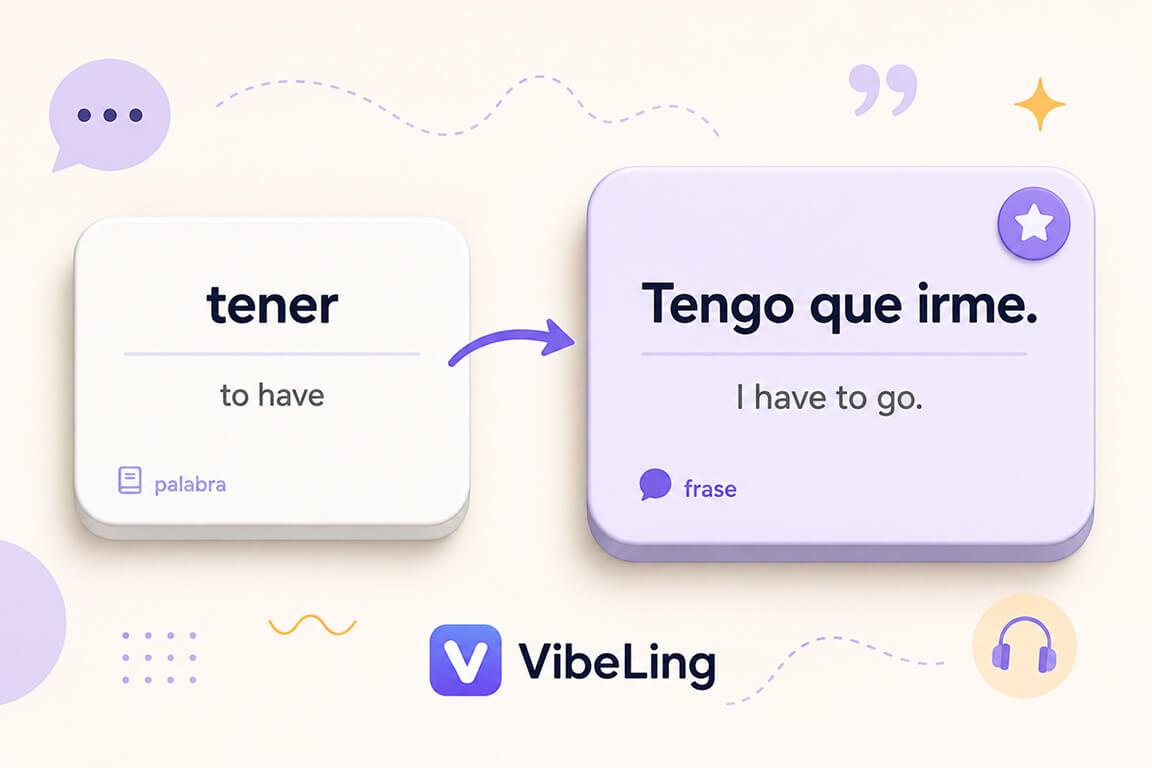
Learn them in threes, not in pairs. Not just «éxito — success», but three pieces at once: éxito is success, and exit is salida. Until you can say «that other» word, your brain will keep slotting in the old association, because it has nowhere else to go.
Memorize inside a phrase, not on a list. In «La salida de emergencia está a la izquierda», the translation «exit-as-éxito» simply can't survive — context throws it out. An isolated word on a list has no such protection. This is a general principle that goes far beyond false friends — we've covered it in the piece on why phrases stick better than single words.
Test yourself in the production direction. The question «what does fábrica mean?» is weaker than «how do you say factory in Spanish? and fabric?». The second format forces you to retrieve both words and put each one in its place. How to build such checks into your regular reviews is covered in this guide to memorizing Spanish words effectively.
Keep your personal list. General round-ups like the table above are a good start, but everyone has their own traps: they depend on what you read and watch. The word that caught you personally is worth ten words from someone else's list.
The first encounter decides everything
With false friends, one thing is critical: which association gets recorded first. If you meet embarazada, silently nod — «sure, embarrassed» — and move on, unlearning it will take a long time. If at that exact moment the real translation shows up next to it, with an example and the pronunciation, the trap never gets to close.
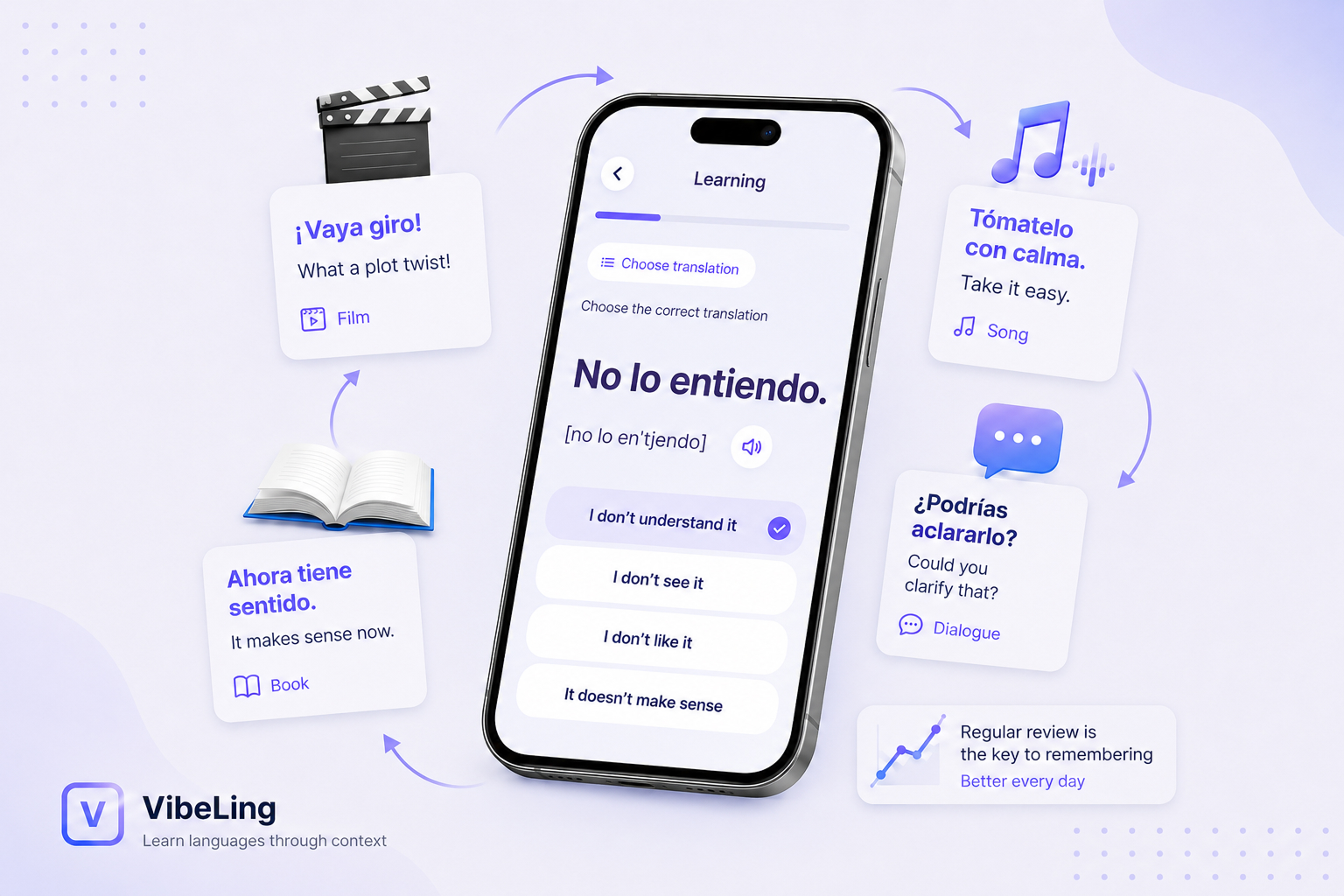
In VibeLing this happens by itself: you run into a suspiciously familiar word in a show or an article, save it, and the app immediately shows you the card with the real translation, a definition, an example in a phrase, and audio. From day one, the association is built on the correct meaning, not on the resemblance.
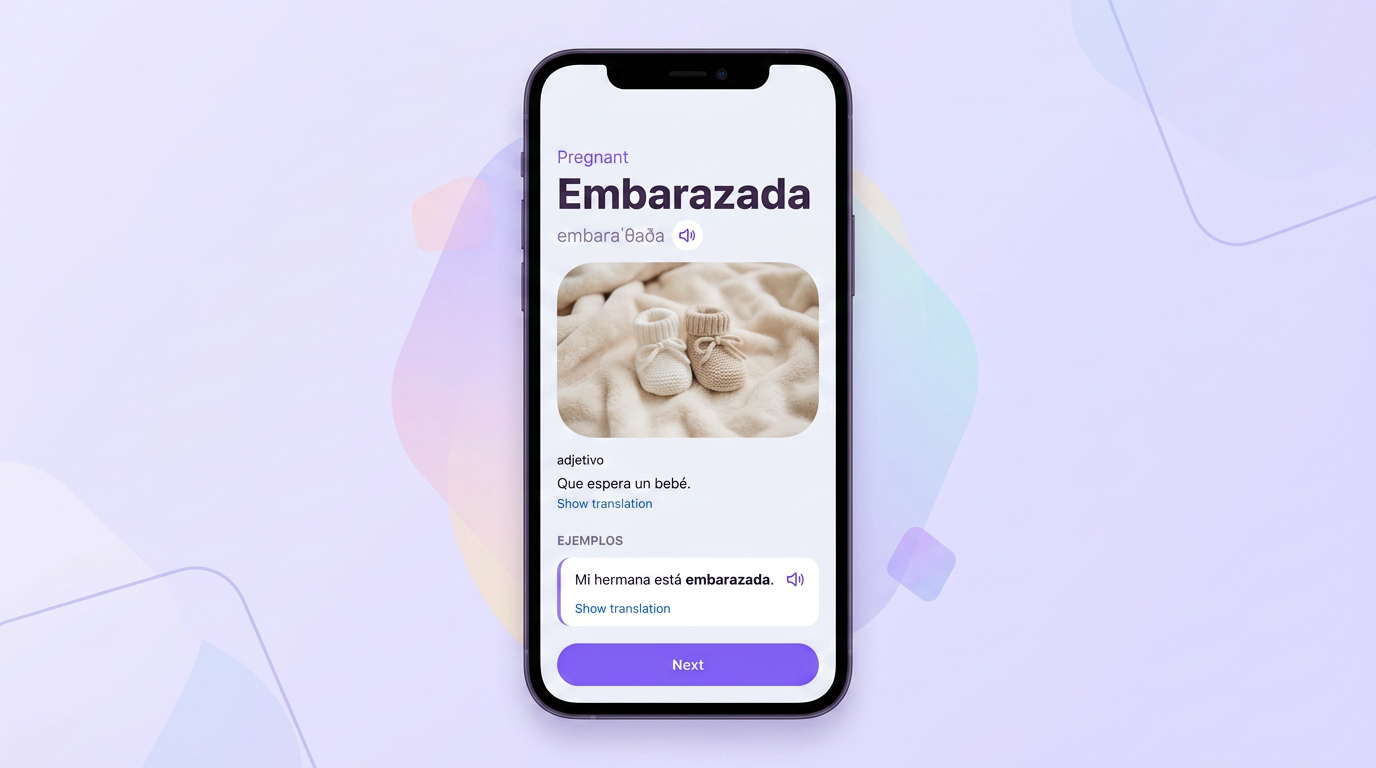
After that the word goes into spaced reviews that quiz you in both directions — what embarazada means, and how to say pregnant. You can gather the traps you've saved into a separate collection and drill it until the confusion is gone.
In short
False friends are a rare case in language learning where you can lay the safety net in advance: the words are few, the list is known, and almost every mistake is predictable. Learn the table above in threes, catch your own traps in real context — and start your personal dictionary in VibeLing so each of them gets recorded with its true meaning from day one. After a couple of weeks of reviews, embarazada will have nothing to do with embarrassment.