How to Break Through a Spanish Vocabulary Plateau
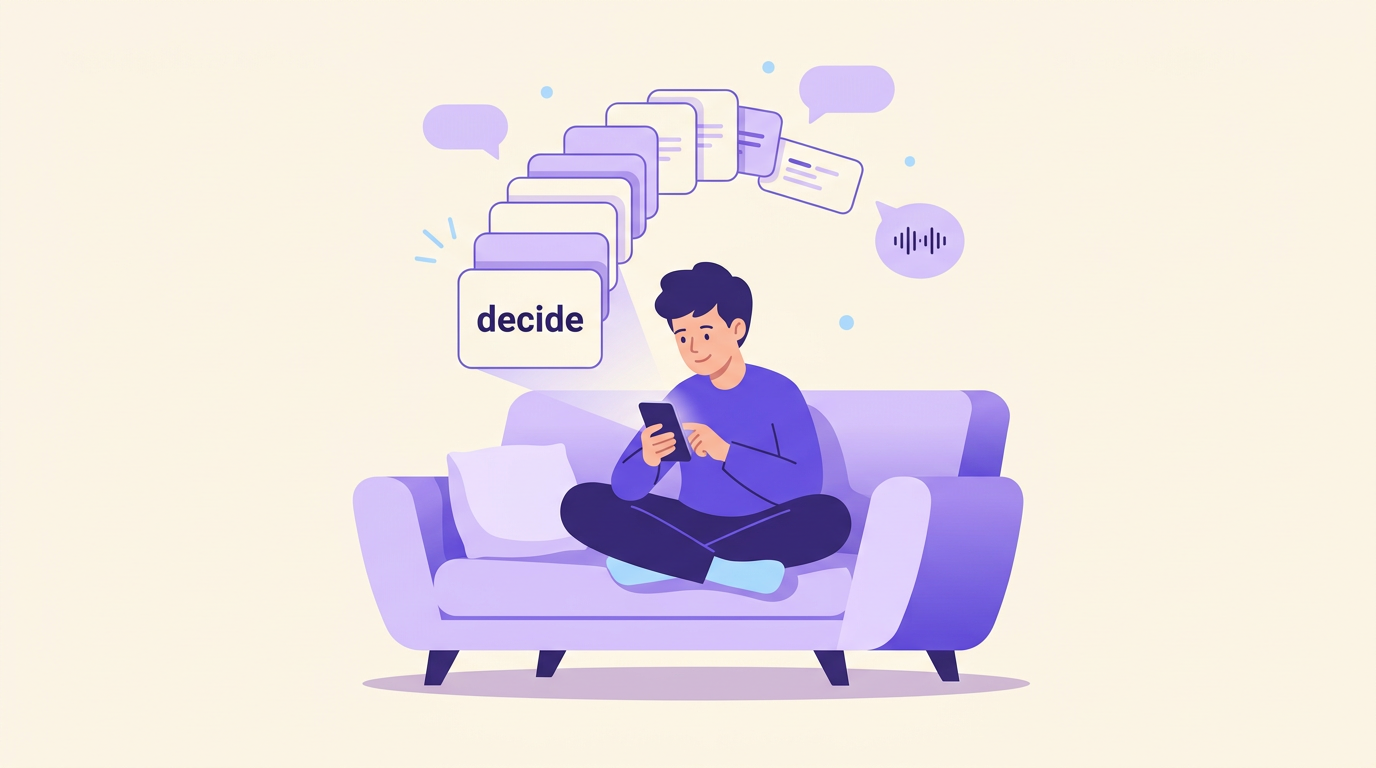
Your first year of Spanish is usually generous. Words stick on their own: hola, gracias, trabajo, cansado — they show up everywhere, and every week brings dozens of new ones. Then something breaks. You study just as much, your app shows the same streaks and percentages, but the feeling of progress is gone. New words come up less often, and the ones that do come up don't stay. It's not laziness and it's not a ceiling on your ability — it's a predictable stage, and it has concrete causes.
Why the growth stops
The main reason is word frequency. The two or three thousand most common Spanish words cover most of everyday speech, which is why early on they meet you everywhere: in lessons, in songs, in messages. Your brain sees a word ten times a week and memorizes it without effort. Word number five thousand shows up far less often. To run into it naturally, you need to read and hear much more Spanish than before. The same hour of daily study starts producing fewer new words — not because you've gotten worse at learning, but because the math has changed.
The second reason is comfortable material. If you read and listen to things you already understand without strain, new words have nowhere to come from. Learning apps make this worse: they adapt to your level and recycle familiar vocabulary for years. If you study in one app and it has stopped giving you anything new, take a look at our breakdown of why it's easy to get stuck on Duolingo and what to do about it.
The third reason is quieter than the first two: your vocabulary is growing, but you can't see it. At the start, the difference between knowing 200 words and knowing 400 feels like a chasm. The difference between 3,000 and 3,400 is almost impossible to notice, even though it's the same 400 words learned. So before changing your method, it's worth figuring out where you actually are — we've written about how many words you need to speak Spanish and how to estimate your current size.
Raise the difficulty of your input
New words live in material that is still hard for you. The rule is simple: if you understand a text or a video at roughly 90–95%, that's your growth zone — comfortable enough to follow the meaning, hard enough to keep meeting the unfamiliar. If you understand everything, you're resting, not learning.
What that means in practice:
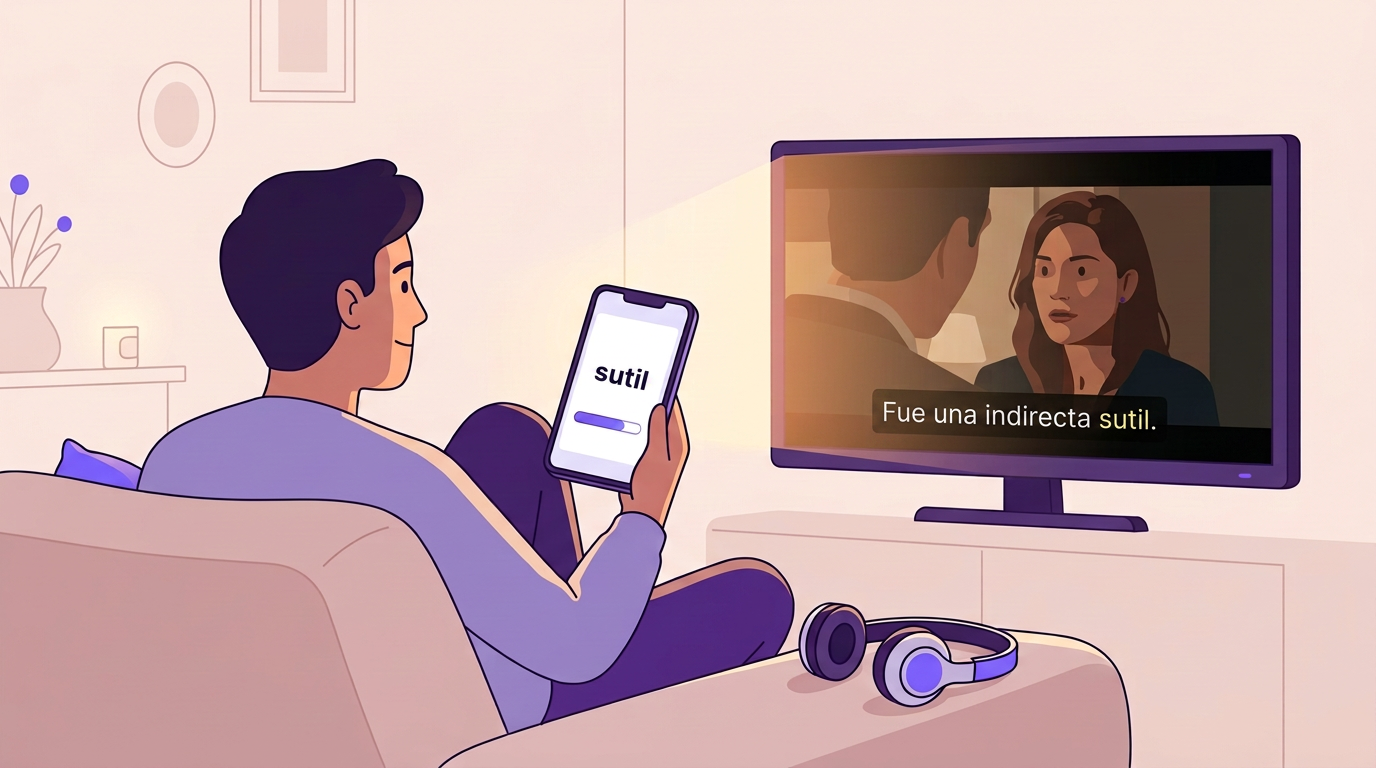
- Shows — unadapted, with Spanish subtitles instead of English ones. Dialogues simplified for learners are the same comfort zone.
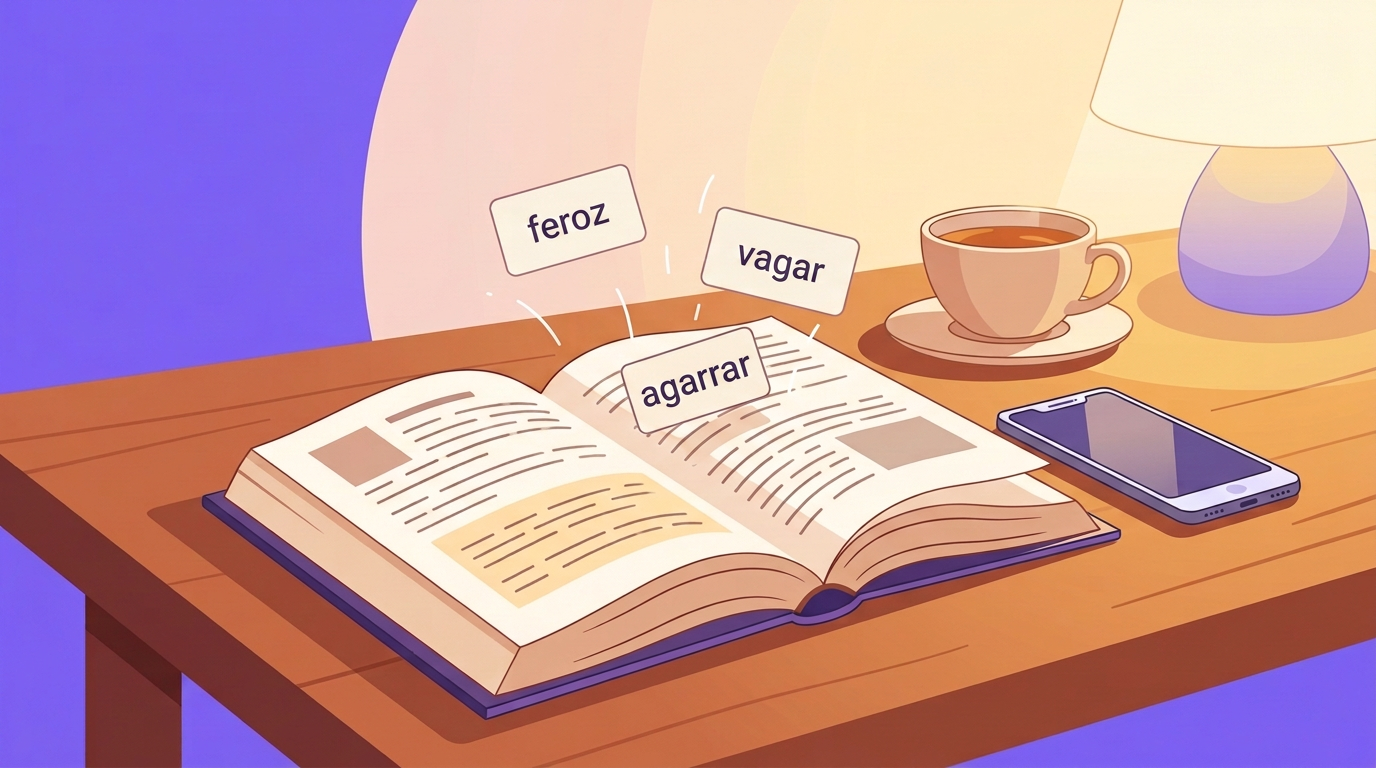
- Books — regular ones, not graded readers, if you're already at an intermediate level. A crime novel or non-fiction in your own field will give you more living vocabulary than any textbook.
- Podcasts and YouTube — channels made for native speakers, not for learners. The speed is scary at first, but that's exactly where the next level of vocabulary lives.
The first couple of weeks on harder content feel uncomfortable. That's a normal sign that you've left the zone where everything is already learned.
Learn your own words, not someone else's lists
Ready-made lists of "1,000 useful words" work well at the beginning, because at the beginning everyone needs the same words. After the first few thousand, paths diverge: a programmer needs one kind of vocabulary, a doctor another, a fan of legal dramas a third. At this stage, universal lists are half full of words you personally will never use, and your brain honestly refuses to hold them.
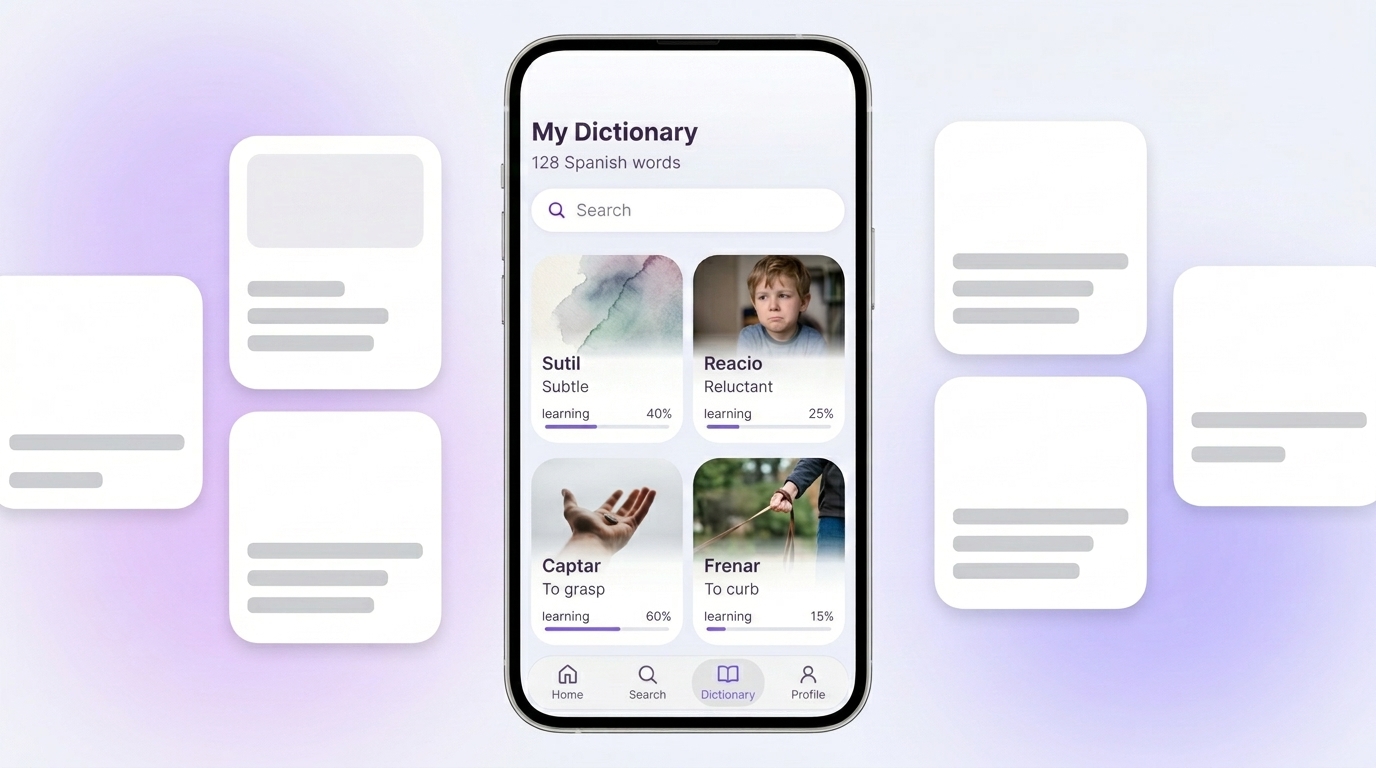
The working alternative is to collect words from your own life: from the show you're watching, from an article at work, from a conversation where a word failed you. Such a word already has context and a personal reason to exist, so it's noticeably easier to remember. This is exactly what VibeLing is built around: when you meet a word, you add it to your own dictionary, the app pulls in the translation, pronunciation and example sentences, and then reminds you about it on a spaced repetition schedule. A month later you don't have an abstract list — you have a personal collection of vocabulary where you know every word by face.
Move your passive vocabulary into active use
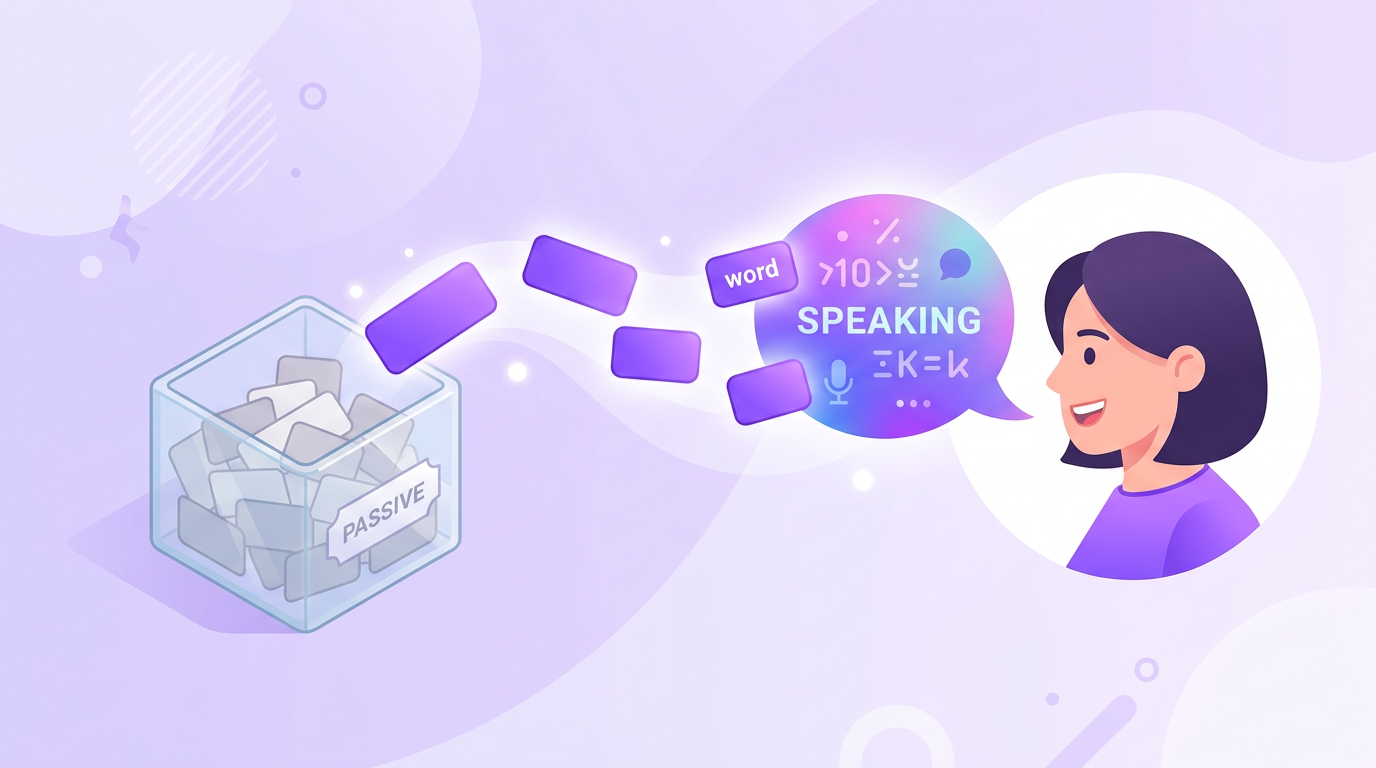
The plateau feeling often comes not from a lack of new words, but from the fact that what you've learned is dead weight. Passive vocabulary is what you understand in text and by ear. Active vocabulary is what you can pull out of memory yourself in a conversation. For most learners the passive stock is two or three times larger than the active one — and you always speak with the active one.
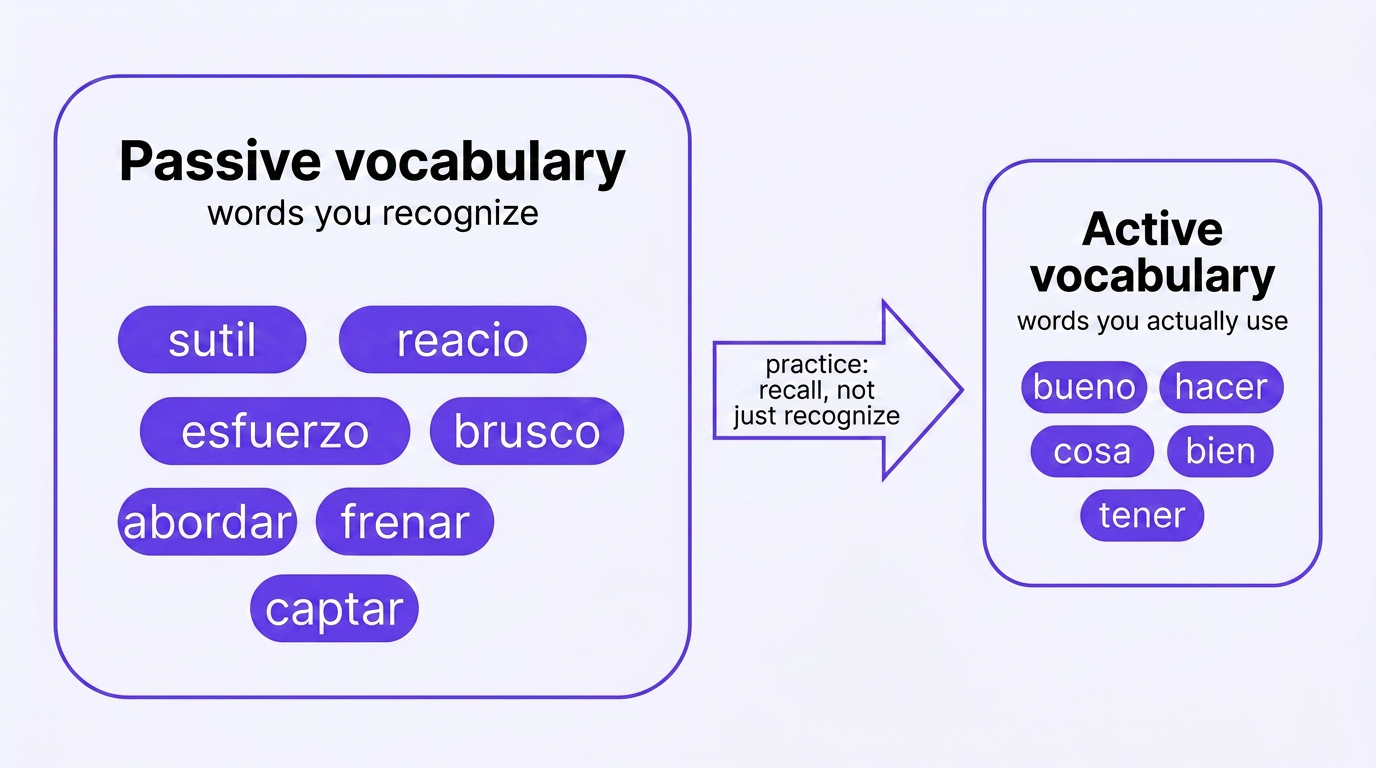
The difference between them is the direction of practice. Recognizing a word in a text and recalling it yourself are different skills. If your exercises are built as "look at the Spanish word and remember what it means," you're only training comprehension. Speech needs the opposite direction: you see the English word "reluctant" — and recall reacio, out loud. In VibeLing these are separate practice modes: translating from English into Spanish, saying the word into the microphone, filling the word into a sentence. A few minutes of this a day do more for your speaking than hours of passive reading.
Go deeper, not just wider
Past a certain level, vocabulary growth isn't only new words — it's new meanings of old ones. Verbs like llevar, quedar, echar and dar have dozens of meanings and appear in hundreds of set phrases: quedarse sin (to run out of), echar de menos (to miss someone), dar igual (to not matter). What separates a native speaker from a learner is not so much rare words as freedom with these combinations.
So when you meet a familiar word in an unfamiliar meaning, save it the same way you'd save a new one. "Quedar — to arrange to meet" is a separate unit of knowledge, not a repeat of something you've covered. This kind of growth doesn't show up in your learned-words counter, but it's exactly what makes your Spanish fluent.
How to tell the plateau is broken
Don't wait for the feeling of the first months to come back — with a large vocabulary, progress simply can't feel that dramatic anymore. Instead of feelings, look at measurable things once a month:
- How many new words you've added and actually learned — in VibeLing you can see this in your dictionary stats.
- Whether content that was hard a month ago has become clearer: the same show, the same author.
- Whether you hit "I don't know how to say this" less often in real conversations.
If there's movement on these three points, the growth is continuing — it just no longer looks like a beginner's takeoff.
Where to start today
The plan for the next week fits into three items. Pick one source of content slightly above your level — an unadapted show, a book, a YouTube channel. Every day, save a few unfamiliar words from it — not fifty, but five to seven, consistently. And add practice in the reverse direction, from English into Spanish, so words don't settle into the passive pile.
You don't need a system of notebooks and spreadsheets for this — it's enough to start a personal dictionary in VibeLing: save words from your own shows and books, and the app takes care of the reviews and the speaking practice. Compare how it feels in a month — most likely, the plateau will turn out to have been a step, not a ceiling.