Paper Flashcards vs Spanish Vocabulary Apps: What Works Better
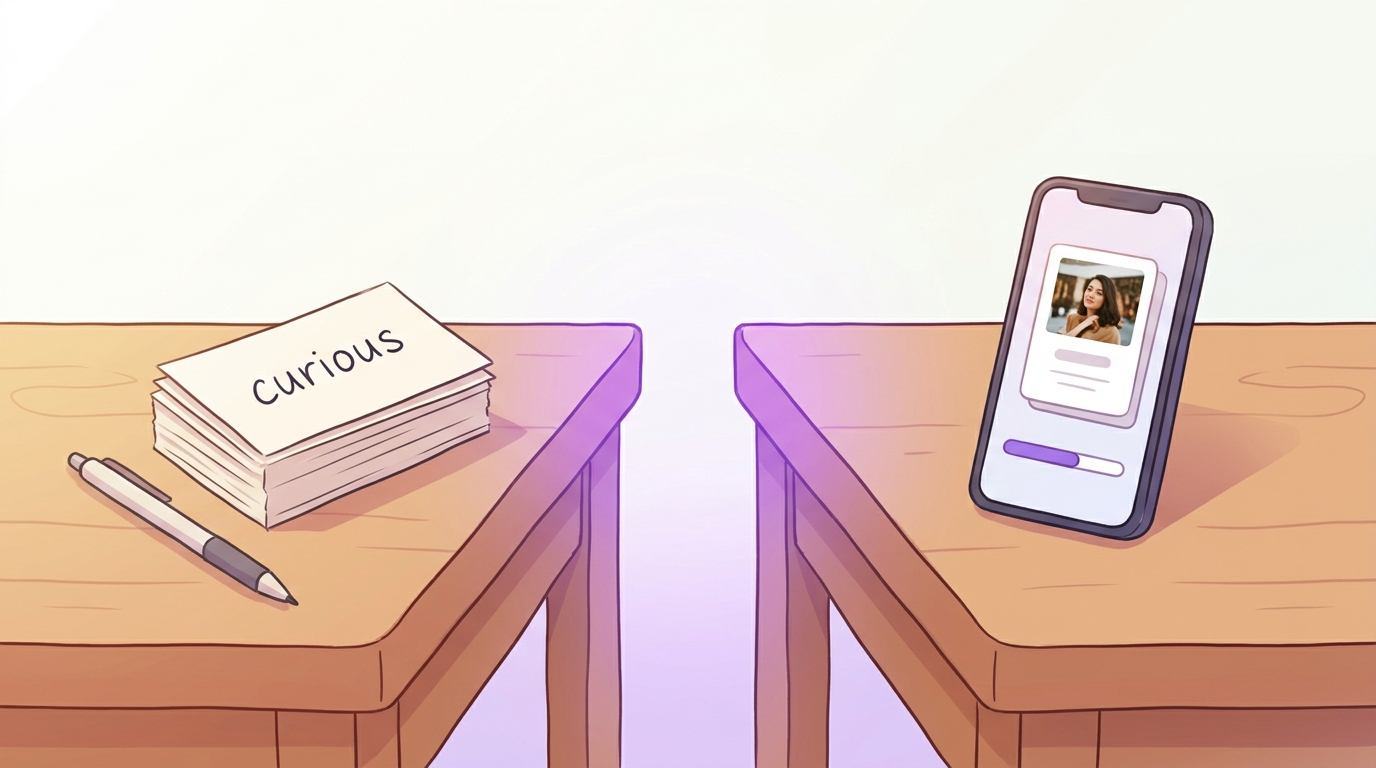
Paper flashcards have outlived every trendy method: people were drilling vocabulary with them long before smartphones, and they still have plenty of loyal fans. Apps promise the same thing, only faster and with reminders. The argument usually stays at the level of taste — "I just like paper" versus "everything lives in my phone anyway." But the real answer depends on things you can actually measure: how many Spanish words you plan to learn, where you run into them, and how much manual work you are willing to do. Let's compare honestly, without cheerleading.
Why flashcards work in the first place
First, what paper and screens have in common. A flashcard in any form makes you recall the answer instead of just recognizing it. You look at the word abrumado and try to pull the meaning out of memory before you flip the card. That is active recall, and it is exactly what moves a word into long-term memory. Rereading a word list does not do this: your eyes slide down the page, your brain recognizes what looks familiar and never breaks a sweat.
So both methods stand on the same foundation. The difference is everything around it: how a card comes into existence, who keeps track of the review schedule, and what the card itself can show you.
What paper does well
- Writing by hand teaches on its own. While you are shaping the word on a piece of card stock, your hand, eyes and attention all work together. Many people remember handwritten notes noticeably better than typed ones — and this is the strongest honest argument for paper.
- Zero distractions. A piece of cardboard has no notifications, no messengers, no feed. When you sit down to review, you review, and nothing drags you off into someone's stories three minutes in.
- Total freedom of format. You can draw arrows, underline verb endings, scribble your own associations in the margins. Paper will put up with any system you invent.
- Progress you can touch. The "learned" pile grows thicker in front of your eyes, and that is a small pleasure a screen cannot give you.
Where paper breaks down
The trouble starts once you get past a couple dozen words.
- Cards have to be manufactured. One word takes a minute or two: write it out, double-check the spelling, look up the meaning, ideally add an example. A hundred words is two or three hours of crafting before a single review happens. This is the stage where most people quit.
- The review schedule is on you. For words to stick, you need to show them to yourself at growing intervals: today, in a day, in three days, in a week. On paper that means the Leitner system with boxes and compartments — it works, but it demands the discipline of a bookkeeper: moving cards between slots and remembering which slot is due today.
- Paper is silent. A card will not pronounce imprescindible for you and will not correct how you say it. You will learn the spelling but not the sound, and the gap shows up in your first real conversation.
- The pile lives at home. Your free ten minutes happen in a line, on the subway, while waiting for a call — and the box of cards is sitting on your desk. So reviews happen less often than they could.
What apps bring
A good app removes all the manual labor and leaves only the learning itself.
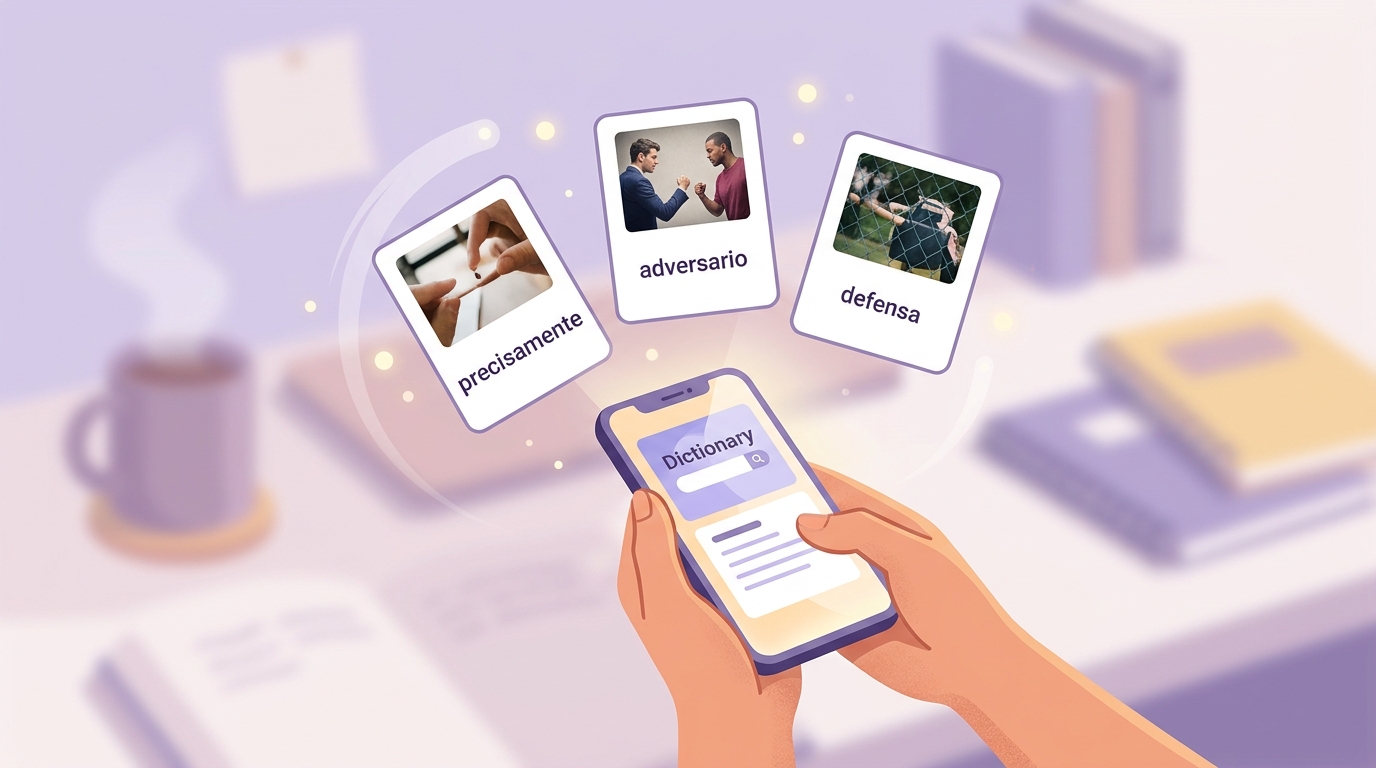
- A card takes seconds to create. You meet a word, type it in — the translation, an example and audio come along automatically. A hundred words is a hundred times a few seconds, not a weekend with scissors.
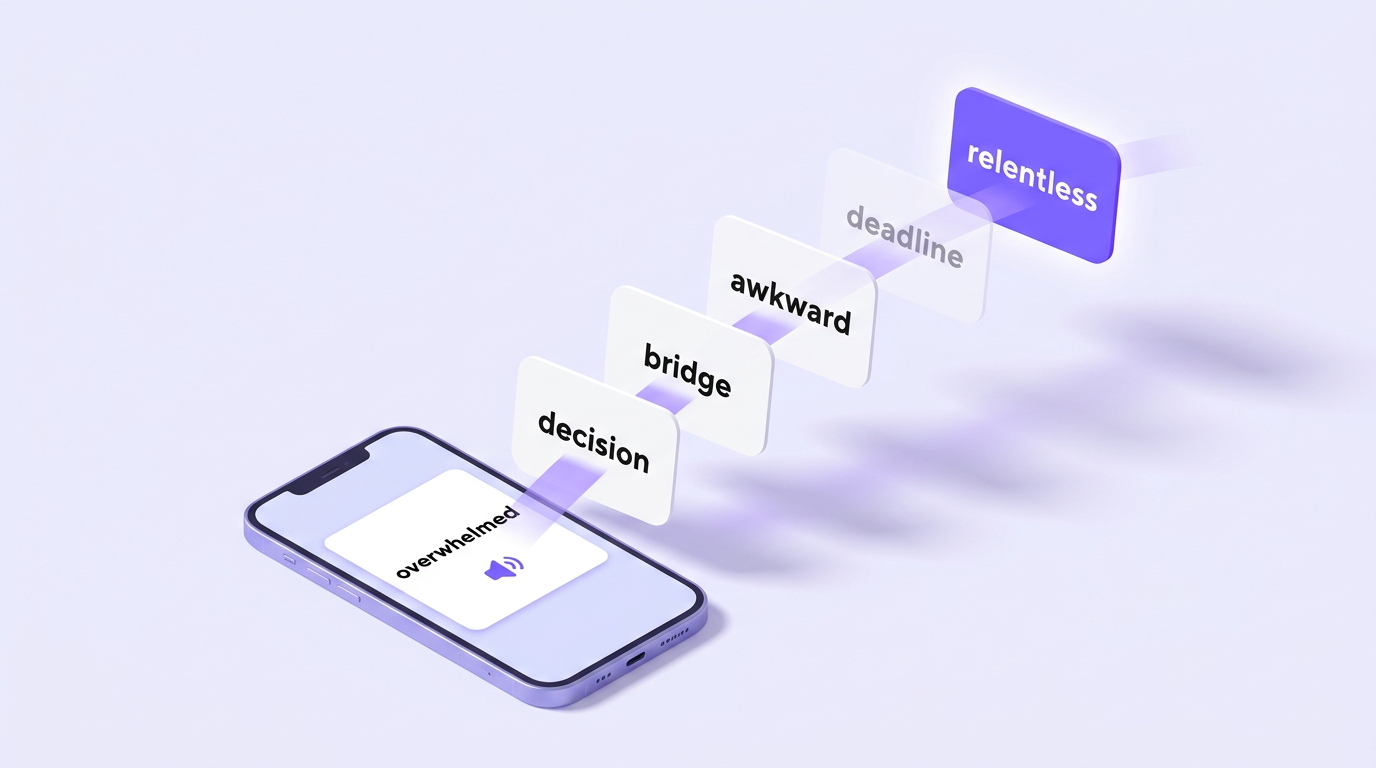
- An algorithm runs the intervals. The app remembers which word is due today and which one can rest for a week. We broke down how this works in our article on spaced repetition — on paper you have to crank that machinery by hand.
- You can hear the word. Audio closes paper's biggest gap: from day one you learn not just the letters but the sound.
- Your dictionary is always in your pocket. Those ten minutes in a line turn into a full review session.
The screen has a downside too, and it deserves to be said plainly: a phone also means notifications. You open the app to review your words, and a minute later you are reading a work chat. The fix is simple — do-not-disturb mode for the length of the session — but you have to remember the trap exists.
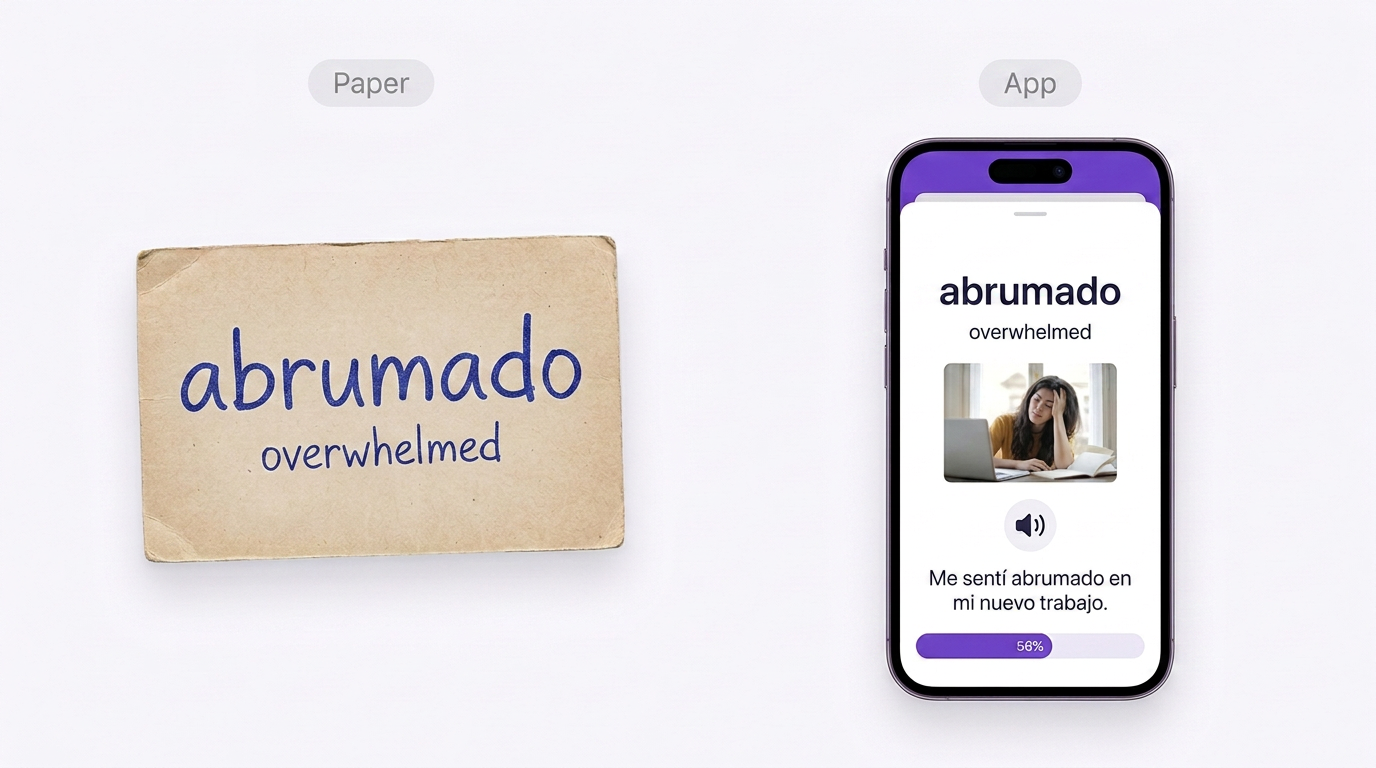
Paper vs app, point by point
| Criterion | Paper flashcards | App |
|---|---|---|
| Creating a card | 1–2 minutes by hand | A few seconds |
| Review schedule | Manual (Leitner boxes) | Handled by the algorithm |
| Pronunciation and audio | No | Yes |
| Available anywhere | Only where the pile is | Always in your phone |
| Distractions | None | Yes, unless you mute notifications |
| Handwriting effect | Yes | No |
| Hundreds of words over months | Painful | Business as usual |
So which one should you pick
The honest answer: volume decides. If you need a couple dozen words for a trip and you enjoy writing by hand — take paper, it will do the job. But a vocabulary you can actually speak with is thousands of words and months of regular reviews. At that distance paper loses not because it "teaches worse," but because it eats your time on card production and forces you to run the schedule manually. What usually happens is that the person simply stops doing it.
There is also a hybrid that teachers like: when you first meet a word, write it down by hand in a notebook — that captures the handwriting effect — and hand the reviews over to an app, so nothing gets forgotten or lost. That way you take the best of both.
How this works in VibeLing
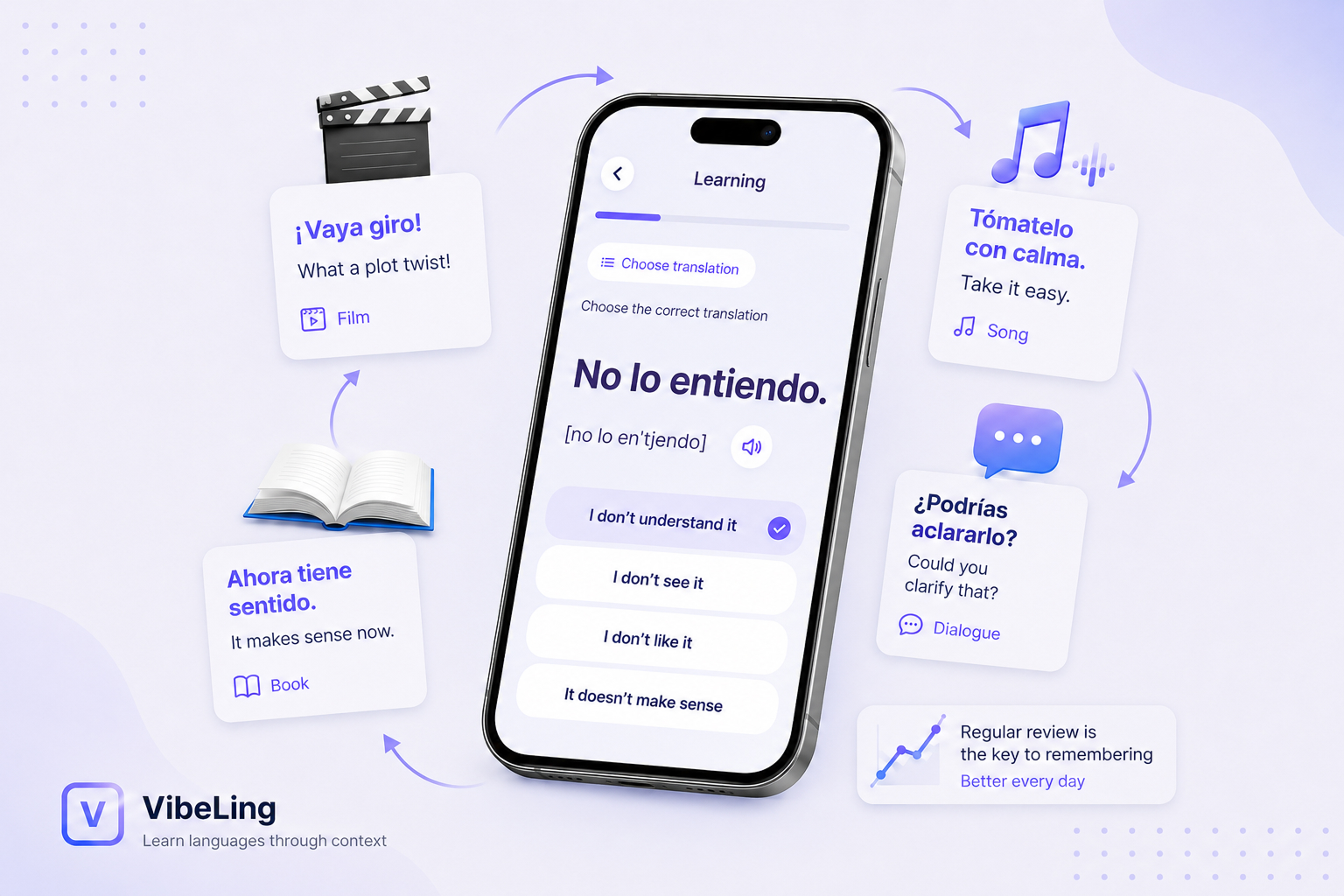
VibeLing does exactly the part that costs the most effort on paper. You type in a word you met in a show, a book or a conversation — the app adds the translation, a real example sentence, a picture and audio on its own. You get a complete flashcard that took you seconds. From there, the spaced repetition algorithm decides when to show the word again, and the exercises go beyond "look and flip": you pick the right meaning, fill the word into a gap, say it out loud — the app listens and checks you.
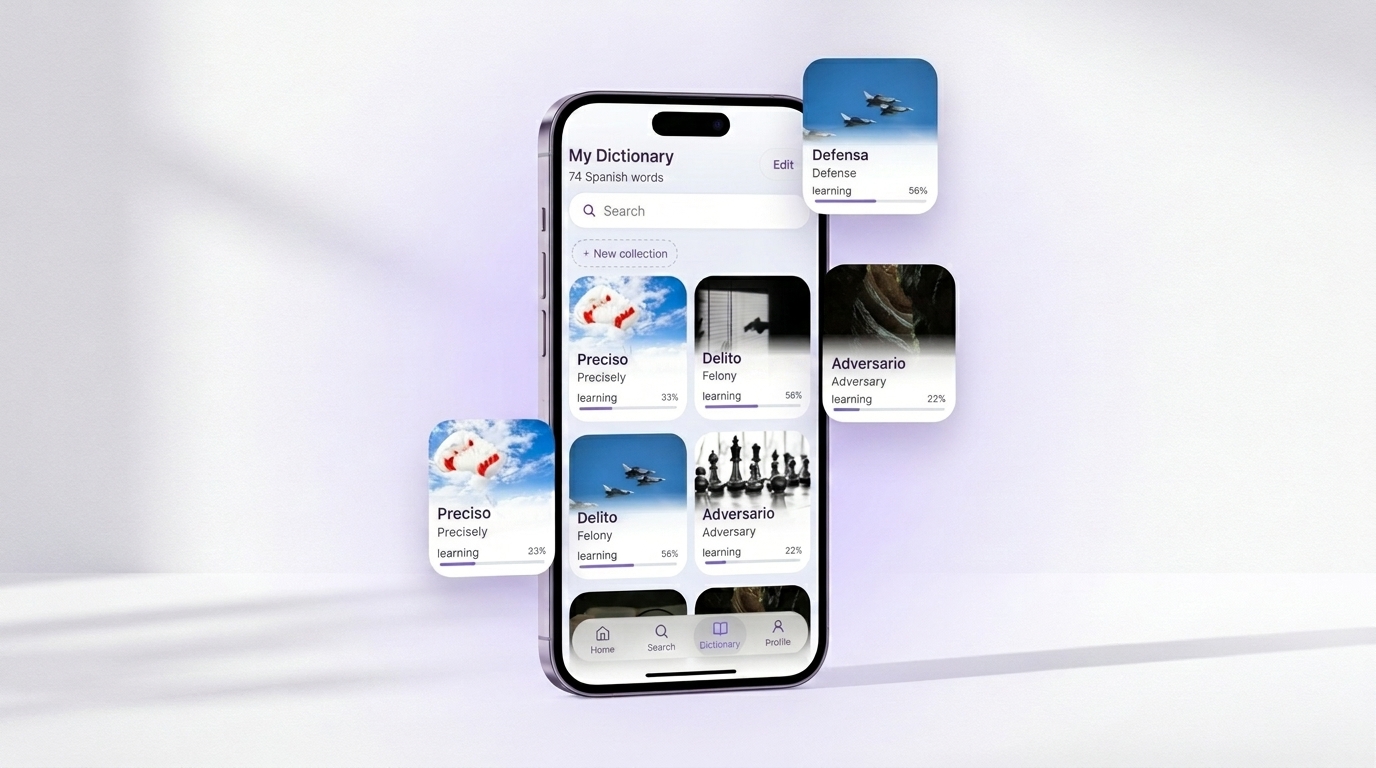
Your words gather into collections with pictures and progress bars — you still get to watch your "learned" pile grow, it just doesn't collect dust on the desk.
Bottom line
Paper flashcards are a real tool, and if they keep you disciplined and happy, there is no reason to drop them. But across hundreds of words, the winner is whichever method costs you the least to maintain: cards should appear instantly, and the review schedule should run itself. Try building your personal Spanish dictionary in VibeLing: save the first ten words you come across today and compare how long it took next to scissors and card stock.