The Best Quizlet Alternative for Spanish Vocabulary
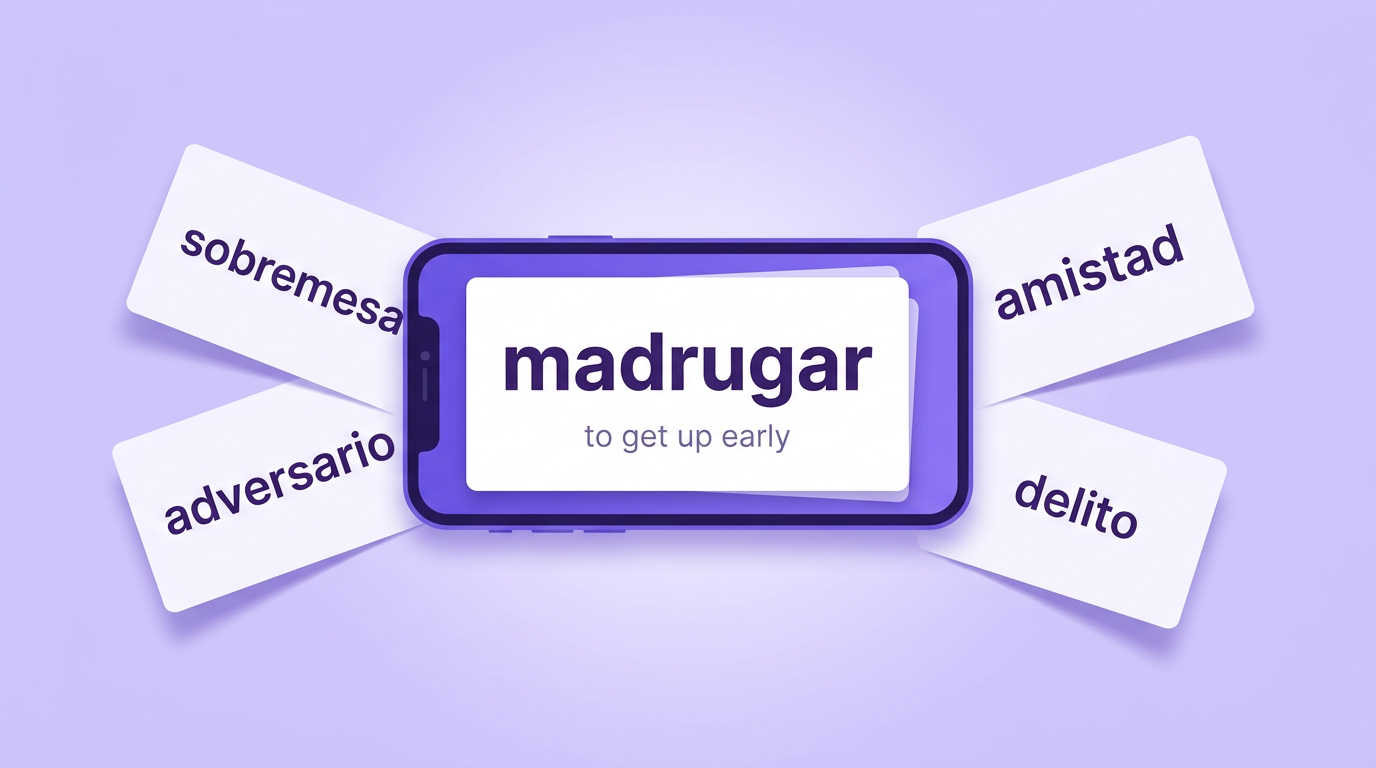
Anyone who has ever crammed for a test knows Quizlet: you find a ready-made set, run the matching game for half an hour, and by morning the list is in your head. That is what it was built for, and it does the job.
Trouble starts when the goal is different: not passing a list by Friday, but building Spanish vocabulary year after year from the things you actually read, watch and hear. Here Quizlet gets in the way — not because it is bad, but because it is built for studying someone else's syllabus. Let's look at what it lacks, and at four apps that handle this scenario better.
What Quizlet does well
Let's be fair about its strengths, because there is no point replacing a tool that already fits you.
- Millions of ready-made sets. For almost any textbook, exam or topic, someone has already made the cards.
- Instant start. Find a set and study. Nothing to create.
- Game modes. Matching and tests work well when you need to survive forty minutes of drilling.
- Web and phone together. Convenient to build a set on a keyboard and review it on your phone.
Get it: App Store · Google Play
If the word list is handed to you from outside and has to be delivered by a deadline, Quizlet is still a reasonable choice. What follows is about the case where nobody hands you a list.
Four reasons to look for a replacement
The sets are someone else's, the words should be yours
A ready-made set called "500 B2 Spanish words" is built so that you already know half of them, and the other half you will probably never need. You study them blind: the word comes with no situation you met it in, and no reason why you need it.
The words that actually stay usually arrive differently: in a series, in an article, in a work chat, in a conversation. Such a word already has context and a reason to be remembered. A deck downloaded from a stranger gives you neither.
Recognition instead of recall
Matching and multiple-choice modes train recognition: you see the right answer among the others and identify it. The feeling is pleasant — it seems the word is learned.
Speaking works the other way round. Nobody shows you four options; you have to pull the word out of your head yourself. That is why exercises where the answer has to be typed or said out loud do far more for conversation than the ones where the answer is already on screen.
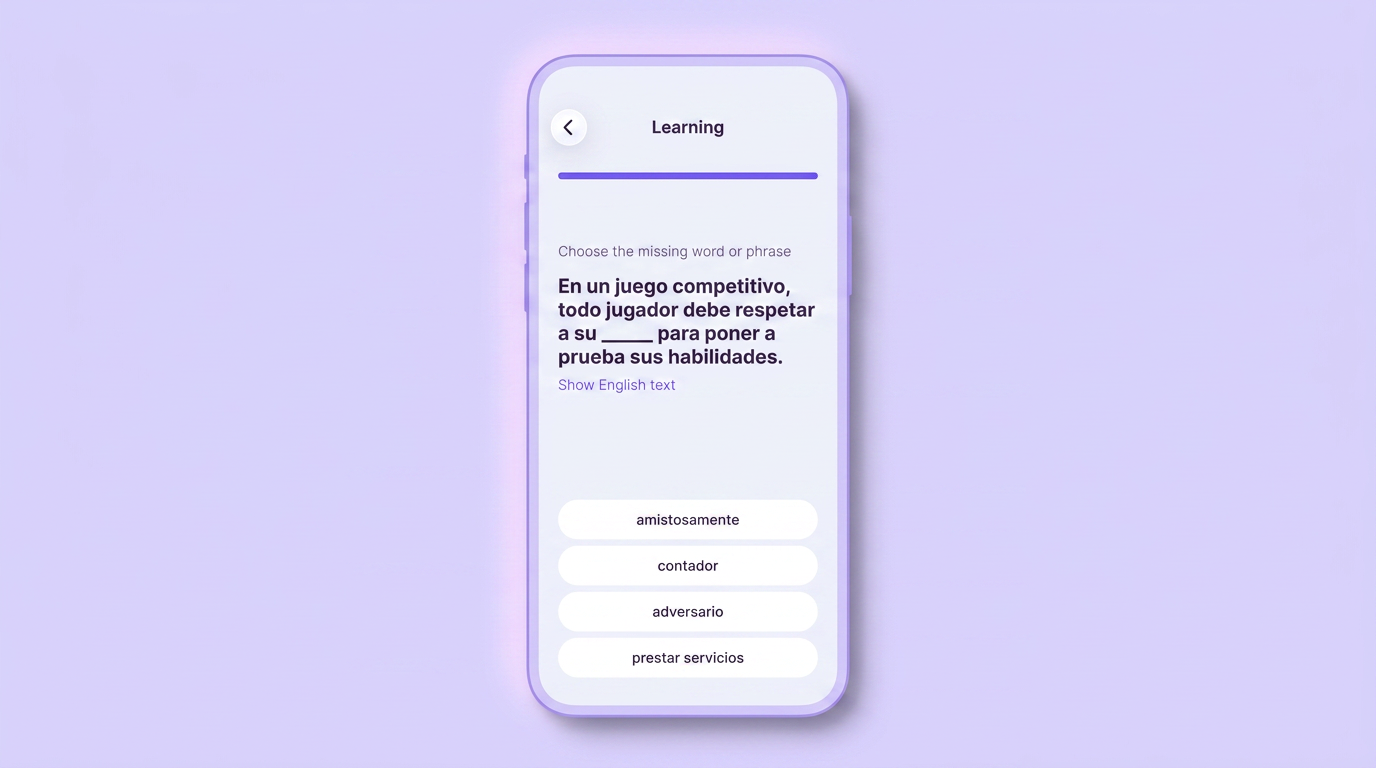
A middle ground is a gap-fill inside a real sentence: you still pick an option, but first you have to understand the whole phrase instead of matching two columns.
The set is finished, the words are still there
Quizlet thinks in sets: you learn one, you move to the next. Words from a set you closed a month ago will not come back on their own — remembering them and starting a review is your job.
For vocabulary the opposite principle matters more: the app itself brings a word back exactly when you are about to forget it, no matter which set it came from or when you added it. We covered how this works in detail in our piece on spaced repetition.
Card quality is unpredictable
User sets are made by learners just like you. Often it is two columns and nothing else: a word and one translation. No example sentence, no note that embarazada means pregnant and not embarrassed. Plain mistakes show up too, and without a dictionary you cannot spot them.
Keep the subscription in mind as well: some modes and offline access in Quizlet are paid, and what belongs to the free tier changes from time to time. Before building a habit on it, check inside the app what is currently available without paying.
What an app instead of Quizlet should do
All of the above turns into a short list of requirements. Let's compare the candidates by it.
- Your own words. You can add any word or phrase you ran into in real life.
- Context. A word comes with an example sentence and its meaning, not just a translation.
- Spaced repetition. The app decides when to bring a word back.
- Recall. There are exercises where you have to produce the answer yourself.
- Audio. There is pronunciation, ideally with speaking practice.
- Little manual work. Adding a word takes seconds, not minutes.
Four alternatives compared
| What matters | VibeLing | Anki | Knowt | Memrise |
|---|---|---|---|---|
| Your own words | Yes, that is the core use | Yes, manually | Yes, manually | Partly, the course comes first |
| Translation and example right away | Yes | No, all on you | No, all on you | Yes, inside the course |
| Spaced repetition | Yes | Yes, finely tunable | Yes, basic | Yes |
| Recall exercises | Typing, gap-fills, speaking aloud | Depends on the card type | Closer to Quizlet's modes | Typing and choice |
| Audio | Pronunciation and voice recording | You add it yourself | Text-to-speech | Videos with native speakers |
| Setup effort | Minimal | High | Medium | Minimal, but someone else's plan |
VibeLing — learn the words you met yourself
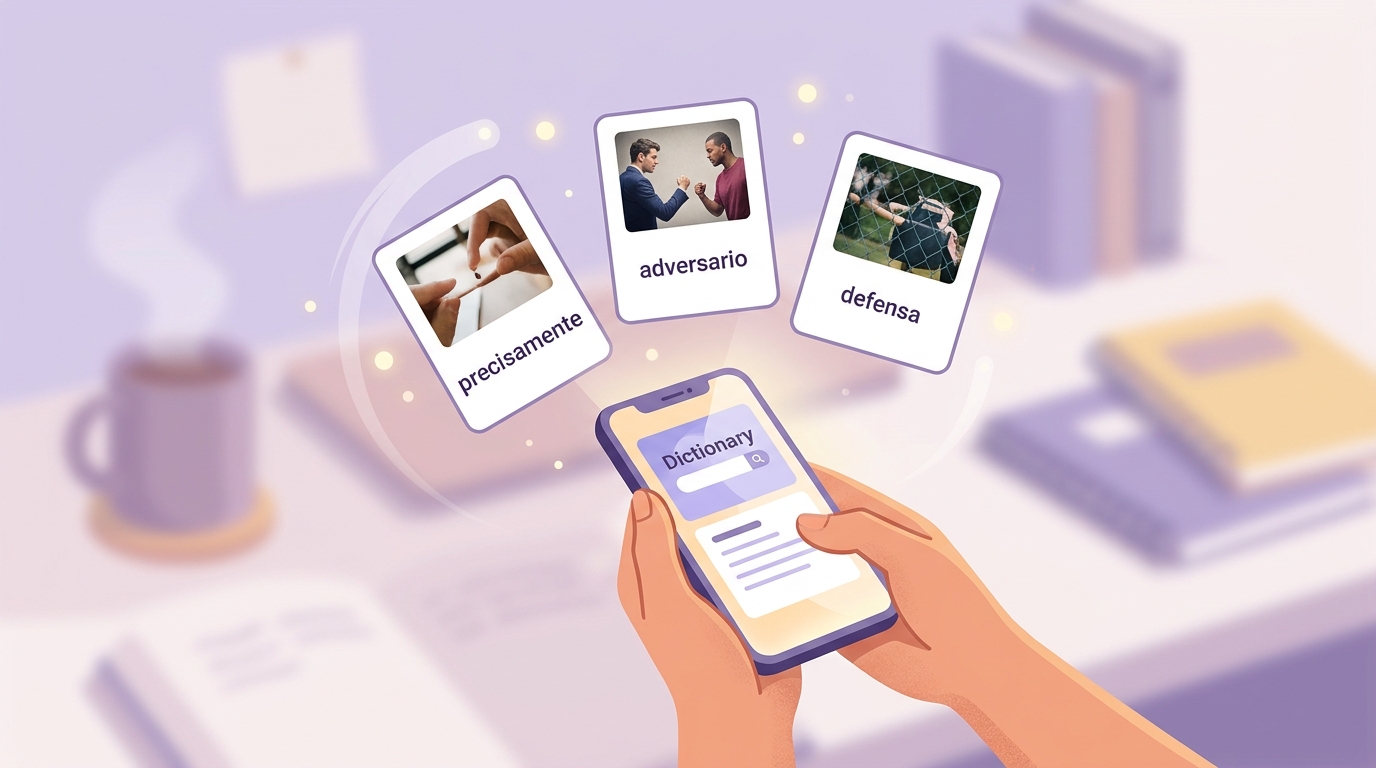
The app is built around a personal dictionary rather than around sets. You run into madrugar in a series, add the word, and the app pulls in the translation, transcription, meaning and an example sentence. From there the word lives in your dictionary and comes back for review on schedule.
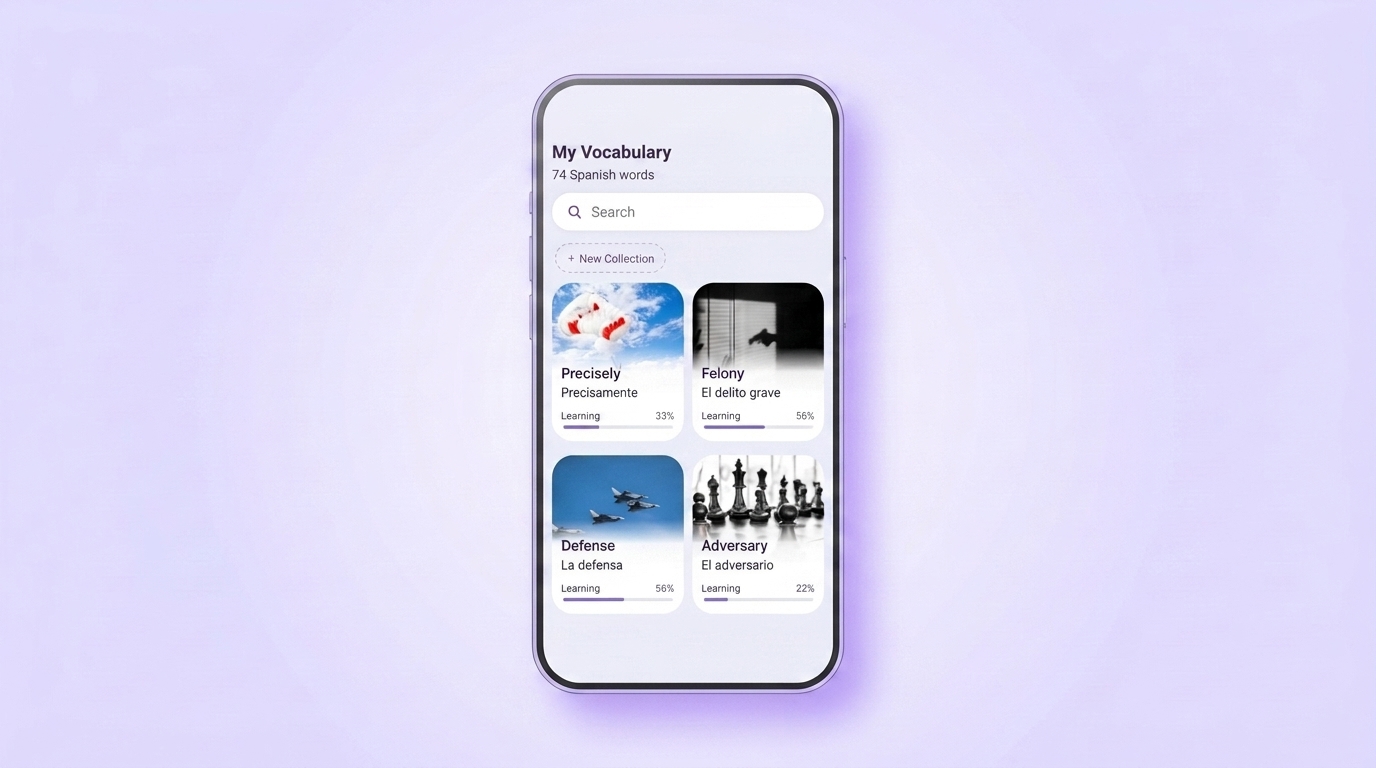
Practice comes in several formats: pick the translation, fill the missing word into a sentence, say the word out loud with microphone checking. That is exactly the set of recall exercises Quizlet's modes are missing. Words can be sorted into collections — work vocabulary in one place, whatever shows up in series in another.
Who it fits: you already understand some Spanish, keep bumping into unfamiliar words and want them not to get lost.
Get it: App Store · Google Play
Anki — full control at the cost of time
The most powerful flashcard system there is. It can be configured for almost anything: custom card types, custom algorithms, add-ons, sync across devices. Spaced repetition here works better than anywhere else.
The price is manual work. You assemble every card yourself: translation, example, audio, layout. Once it is easy, but at ten new words a day it turns into a hobby of its own. We looked at this trade-off in more detail in our article on an Anki alternative without building cards by hand.
Who it fits: you enjoy tuning a system to your taste and don't mind spending time on it.
Get it: App Store · Google Play — on iOS this is the paid AnkiMobile app, on Android the free AnkiDroid.
Knowt — the same Quizlet, but free
The closest analogue by design: card sets, similar study modes, import of Quizlet sets. People usually come here after hitting paid features and wanting to continue in a familiar format.
Which is exactly why Knowt does not solve the problems from the first half of this article: it is still studying by sets and mostly by recognition. Switching apps here saves money rather than changing the approach.
Who it fits: everything about Quizlet suited you except the subscription.
Get it: App Store · Google Play
Memrise — a ready course with real speech
The base here is a course with curated vocabulary plus short videos where native speakers say phrases at normal speed. It helps a lot if you read fine but understand nothing by ear.
The limitation is the same as with Quizlet: the programme is someone else's. You can add your own words, but the app is not built around them.
Who it fits: you need a ready base and listening practice.
Get it: App Store · Google Play
How to move your words out of Quizlet
The migration scares people more than it should. The order is this:
- Open your set on the Quizlet website and look for export in the set menu — it gives you the list as text, and you can choose the separators between term and translation. If there is no such button, just open the set and copy what you need.
- Do not move everything. Go through the list and keep only the words you genuinely need — usually noticeably fewer than half.
- Add the selected words to the new app, and from then on grow the dictionary from your own life instead of other people's sets.
The second point matters most. The point of moving is not to relocate five hundred cards, but to stop studying someone else's lists.
Conclusion
Quizlet covers cramming a given list before a deadline perfectly well. If your goal is longer — building vocabulary over years and speaking more freely — you need a tool where the words are yours, they come with context and audio, and the app plans the reviews.
Anki gives you that at the cost of manual work, Knowt saves money, Memrise helps with listening. And if you simply want to save the words you meet and come back to them at the right time, try keeping a personal Spanish dictionary: add ten words you ran into over the past week and check in seven days how many come back without prompts.